Men’s Halloween Costume Accessories Guide: Beards, Props & Weapons Kit
A costume can have the right jacket, the right boots, and the right colours, yet still look unfinished. Usually, the missing piece is sitting somewhere outside the main outfit— costume accessories that complete the look and bring the character to life.
A beard can turn a plain tunic into a Viking. A wig can make a character recognizable from across the room. The right prop can establish the role before you say a word.
That is why men’s Halloween costume accessories matter. The best approach is simple: choose a strong base costume, then add only the accessories that belong to that character.
Start With the Character, Then Build the Accessory Kit
The easiest way to choose accessories is to ask what the character would realistically carry, wear, or use.
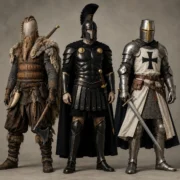
A Viking might need a beard, arm bracers, belt, shield, and costume-safe axe. A medieval knight needs a sword, shield, cloak, or helmet. A 1990s character such as Garth from Wayne’s World depends heavily on the wig and glasses.
The same rule applies to modern character-inspired costumes. A dark, textured outfit may suit a Daredevil: Born Again or Spider-Noir-inspired look, while a fantasy warrior can benefit from the layered props associated with games such as Mortal Kombat or Elden Ring.
Do not buy accessories simply because they look good on their own. They should support the same character.
If you are still deciding on the costume itself, start with these tips to choose a perfect Halloween costume.
Beard and Weapon Costume Accessories That Change the Whole Look
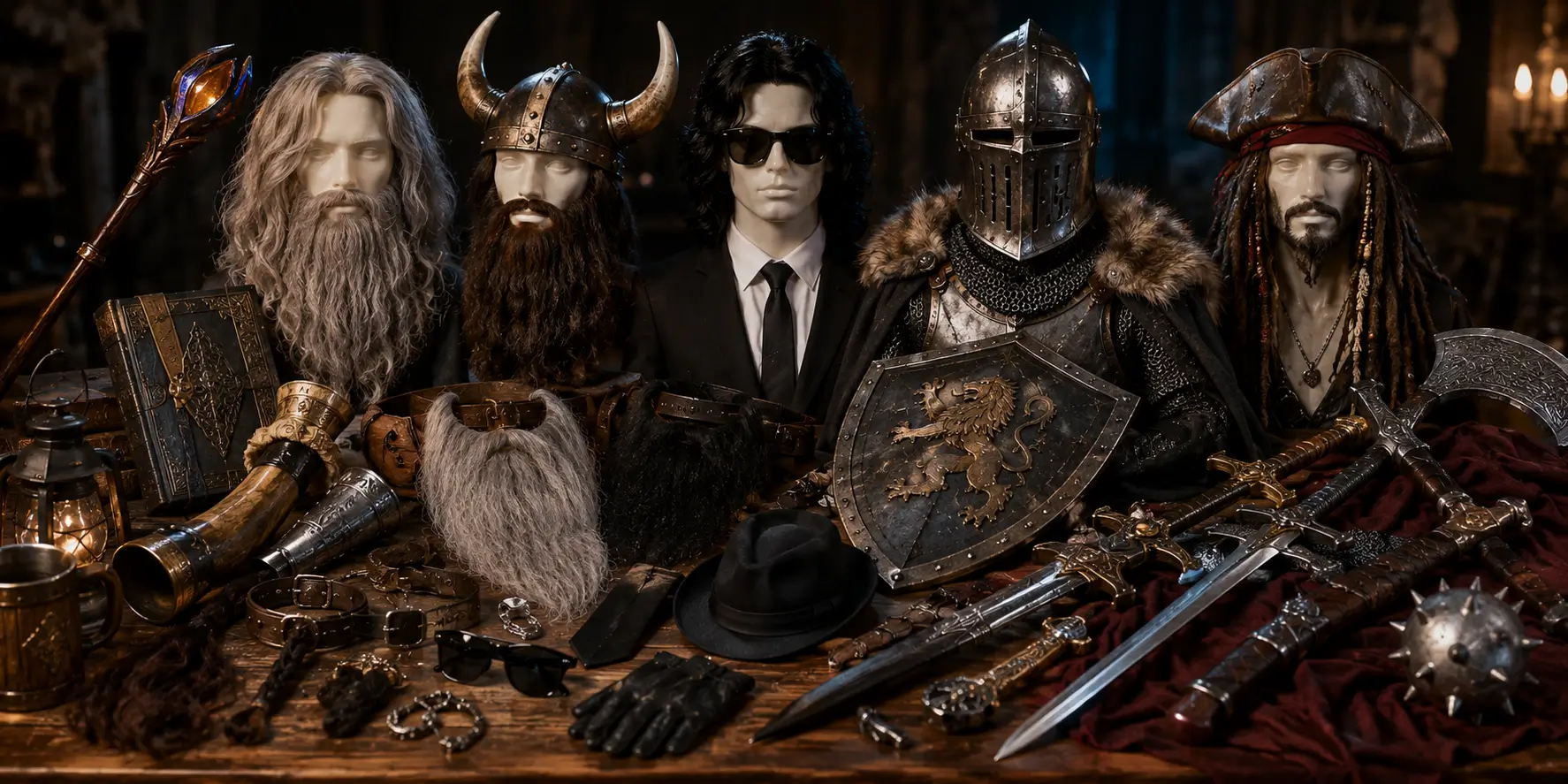
Among all beard and weapon costume accessories, facial hair and props can create the biggest visual change with the least effort.
A fake beard can give you a Viking, wizard, lumberjack, pirate, or post-apocalyptic survivor look. A safe prop sword, axe, or staff can establish whether the character is a knight, warrior, fantasy fighter, or horror figure.
The key is proportion.
A small, smooth plastic sword may look strange with heavy medieval armour. A large, detailed prop may overpower a simple costume. Match the size, texture, and style of the accessory to the outfit.
What Are the Best Fake Beard Options for Halloween Costumes?
The best fake beard depends on how realistic and comfortable you want the costume to be.
Simple elastic or mask-style beards work for short events and humorous costumes. Fuller synthetic beards can create stronger Viking, wizard, pirate, and fantasy looks. Higher-detail facial hair pieces may allow trimming and shaping for a more natural finish.
For a rugged warrior costume inspired by characters such as Ragnar Lothbrok, look for a beard with uneven texture rather than perfectly uniform hair.
Choose the beard after considering the wig, hair colour, and overall costume. A dark beard with a light wig can work for a specific character, but the contrast should look intentional.
Finding the Right Wig
Search terms such as Costume Wigs Near Me, Mens Wigs Near Me, and Mens Wig Near Me usually lead shoppers toward local options, but the fit and style matter more than simply finding the closest wig.
A wig should match the character’s era, hairstyle, and overall silhouette. Viking braids, shaggy 1990s hair, long fantasy locks, and clean-cut character wigs all create very different results.
How Do You Attach a Fake Beard So It Stays On All Night?
For longer wear, attach a fake beard to clean, dry, oil-free skin using an adhesive designed for cosmetic or costume use and follow the manufacturer’s instructions.
Test the adhesive on a small area first, particularly if you have sensitive skin. Press the beard into place carefully and allow the adhesive to set before touching or styling it.
Avoid pulling or repeatedly adjusting the edges during the night. The more you handle the attachment points, the more likely they are to loosen.
If you are wearing a helmet, mask, or wig, test the entire combination before Halloween. One accessory can interfere with another.
What Halloween Weapon Props Look the Most Realistic?
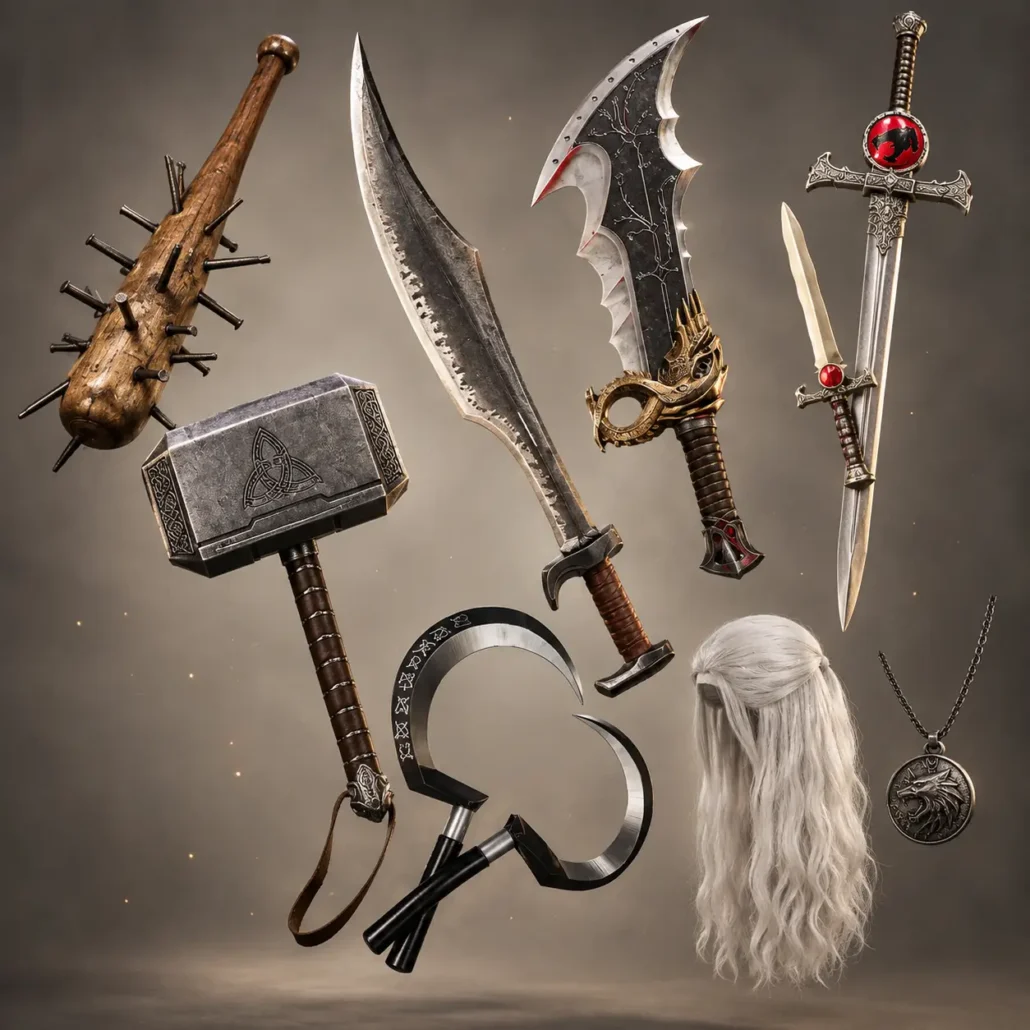
Detailed EVA foam, latex, polyurethane, or moulded costume props can create a convincing appearance while remaining lighter than real metal.
Surface details matter. Look for sculpted grips, textured handles, layered paint, and weathered finishes rather than smooth, brightly coloured plastic.
Fantasy swords inspired by games such as Elden Ring or Mortal Kombat often rely on oversized shapes and detailed finishes. For horror costumes, a lightweight replica-style prop may work better than a child’s brightly coloured toy.
Always check the rules of the venue before bringing any weapon-shaped prop. Schools, public events, conventions, and private venues may restrict or prohibit them.
How Do You Choose Costume Accessories That Match Your Outfit?
Choose accessories from the same visual world as the costume.
A Men in Black-inspired outfit works best with clean sunglasses, a narrow tie, and sleek character props. A medieval warrior needs rougher textures such as leather, metal-look finishes, and fabric.
Use this three-part check:
- Era: Does the accessory suit the historical or fictional period?
- Material: Does its texture match the costume?
- Scale: Does the prop look proportionate when you wear it?
If one accessory looks as though it belongs to another costume entirely, leave it out.
For more finishing ideas, explore these Halloween costume accessories.
What Accessories Make a Costume Look More Complete?
The most useful accessories are the ones that make the character immediately recognisable.
For example:
- Viking: Beard, bracers, belt, shield
- Knight: Helmet, cloak, shield, safe prop sword
- Wizard: Beard, wig, staff, robe belt
- 1990s character: Wig, glasses, hat, or a recognisable prop
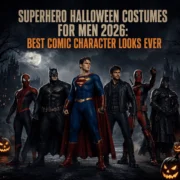
- Superhero or comic character: Gloves, mask, belt, textured outerwear, character-specific accessories
The main costume creates the foundation. Accessories provide the details that tell people exactly who or what you are meant to be.
Are Foam Halloween Weapon Props Safe for Kids’ Events?
Soft foam props are generally a better choice than rigid or heavy props for family-friendly events, but safety depends on the specific product, its construction, and how it is used.
Check the manufacturer’s age guidance and inspect the prop for hard internal parts, sharp edges, loose pieces, or damage before use.
Even a lightweight prop may be prohibited at some schools or events. Check the venue’s rules before bringing swords, axes, knives, or other weapon-shaped accessories.
Adult supervision remains important when young children are using larger costume props.
How Do You Style Facial Hair for a Costume Character?
Start by deciding whether your natural facial hair supports the character.
For a Viking, longer facial hair can be combed, textured, and lightly braided. For a sharply defined 1990s-inspired character, trim your beard or goatee into a more precise shape.
Characters with exaggerated moustaches or beards may require a costume hairpiece instead.
Use styling products that suit your skin and hair, and avoid applying unfamiliar products for the first time immediately before an event. A trial run gives you time to adjust the shape and comfort.
What Is the Difference Between Costume Props and Toy Props?
Costume props are generally designed around appearance and character presentation. They may include realistic textures, weathered paint, detailed grips, and proportions intended for costumes or photographs.
Toy props are often designed primarily for play and may use brighter colours, simpler construction, and more child-focused features.
Neither is automatically better. A toy prop may be the better choice for a young child’s costume, while a detailed costume prop may better suit an adult attending a party, convention, or costume event.
The event, character, age of the user, and venue rules should guide the decision.
How Do You Clean and Store Costume Accessories After Halloween?
Clean accessories according to their material and manufacturer instructions.
Wigs should be gently detangled before storage. Facial hair pieces should have adhesive residue removed only with products recommended for that material. Foam and moulded props can usually be wiped carefully if the manufacturer permits it.
Store wigs in a clean bag, box, or suitable form that helps prevent tangling. Keep foam props away from crushing weight and excessive heat so they retain their shape.
Taking a few minutes to store your accessories properly can save you from replacing them when next Halloween arrives.
What Accessories Are Must-Haves for a Beginner Costume Builder?
A beginner does not need a box full of random props.
Start with a small, flexible kit:
- A wig or wig cap when the character requires a different hairstyle
- Costume-safe facial hair
- Skin-safe adhesive designed for costume use
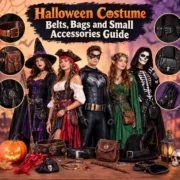
- Belts, straps, or gloves that work with several costumes
- A small selection of character-specific props
- Basic repair supplies recommended for your costume materials
Buy the accessories that solve a specific problem in the costume. A beard should establish the character. A belt should support the silhouette. A prop should reinforce the role.
That approach keeps the costume focused and easier to assemble.
Build the Costume Before You Build the Arsenal
Accessories should finish the character, not bury him under unnecessary gear.
Choose one or two defining pieces first. For some costumes, that might be a beard and wig. For others, it could be a helmet and shield or a pair of recognisable glasses.
Once those pieces are in place, step back and look at the full costume. Add only what strengthens the character.
Find the Details That Finish the Look
The right men’s Halloween costume accessories can turn a simple outfit into a recognisable character. Whether you are looking for wigs, beards, armour, props, masks, or other finishing pieces, seeing the options together makes it easier to build a complete look.
Kreepy Halloween offers costumes and accessories across a wide range of character styles, with the project’s brand positioning centred on broad selection and expert costume guidance.
For more costume inspiration, browse where to get a costume or explore ideas from a Halloween costume superstore.
Pick the character first. Then choose the beard, wig, prop, or finishing detail that makes the costume unmistakable.
Frequently Asked Questions
What are the best fake beard options for Halloween costumes?
The best fake beard options depend on the character and comfort level. Synthetic beards work well for Vikings, wizards, pirates, and fantasy characters, while higher-detail pieces can create a more realistic finish. Pairing one with the right men’s Halloween costume accessories can make the character look more convincing.
How do you attach a fake beard so it stays on all night?
Attach a fake beard to clean, dry skin using a skin-safe costume adhesive and follow the product instructions. Test the adhesive beforehand and avoid repeatedly touching the edges. A properly fitted beard is one of the most effective beard and weapon costume accessories for a detailed character look.
What Halloween weapon props look the most realistic?
Detailed EVA foam, latex, polyurethane, and moulded costume props with textured handles, weathered paint, and realistic surface details usually create the strongest appearance. Always check venue rules before carrying weapon-shaped costume props.
How do you choose costume accessories that match your outfit?
Choose accessories that match your character’s era, style, colour palette, and overall theme. A Viking costume may need a beard, bracers, and shield, while a superhero or detective costume may require gloves, masks, glasses, or character-specific props.
What accessories make a costume look more complete?
Wigs, fake beards, gloves, hats, belts, masks, jewellery, armour, and character-specific props can make a costume feel complete. Searches for Costume Wigs Near Me, Mens Wigs Near Me, or Mens Wig Near Me can also help shoppers find hairpieces that match a particular character.
Are foam Halloween weapon props safe for kids’ events?
Soft foam weapon props can be safer than rigid alternatives for children’s events, provided they are age-appropriate and used responsibly. Check for hard parts, damage, sharp edges, and venue restrictions before bringing them to a school or family event.
How do you style facial hair for a costume character?
Style natural facial hair according to the character. Vikings may suit textured or lightly braided beards, while other characters may require a neatly trimmed moustache, goatee, or costume beard. Use skin- and hair-safe styling products and test the look before the event.
What is the difference between costume props and toy props?
Costume props are usually designed for appearance and may feature realistic textures, weathering, and character-specific details. Toy props are generally designed for play and may use simpler construction and brighter colours. Choose the option that suits the costume, user, and event rules.
How do you clean and store costume accessories after Halloween?
Follow the manufacturer’s care instructions for each item. Detangle wigs before storage, clean facial hair pieces with suitable products, and wipe props carefully where appropriate. Store men’s Halloween costume accessories in a clean, dry place away from excessive heat and crushing weight.
What accessories are must-haves for a beginner costume builder?
A beginner can start with a wig or wig cap, costume-safe facial hair, suitable adhesive, belts or gloves, and one or two character-specific props. Building around a few useful beard and weapon costume accessories is usually more effective than buying too many unrelated pieces.



Leave a Reply
Want to join the discussion?Feel free to contribute!