

Halloween Costume Safety Tips for Visibility, Fit and All-Night Comfort
A costume can look perfect in the mirror and still become a problem once you start walking, dancing, or climbing stairs. A mask may block your view. New shoes may hurt. A long cape may become a tripping risk.
That is why a few Halloween costume safety tips can make a big difference. The goal is not to make your costume less creative. It is to make sure you can enjoy it comfortably and safely from the first photo to the last party.
This safe Halloween costume guide covers the details people often overlook, including fit, visibility, masks, wigs, footwear, makeup, props, and weather.
What Makes a Halloween Costume Safe and Comfortable?
A good costume should allow you to move naturally without constant adjustments. Before Halloween night, check the complete outfit rather than looking at each piece separately.
Make sure you can:
- See clearly.
- Breathe comfortably.
- Walk without tripping.
- Sit and stand easily.
- Move your arms freely.
- Keep accessories secure.
- Stay comfortable for several hours.
These simple checks are the foundation of a safe Halloween costume guide.
What Costume Problems Usually Appear After You Start Wearing It?
Some costume problems are not obvious until you actually move around in the outfit.
1. The Mask Looks Good but Blocks Your Vision
A detailed mask can complete a character, but small eye openings can make stairs, crowds, and outdoor areas difficult to navigate. Try walking while wearing it before Halloween.
2. The Costume Fits but Restricts Movement
A costume can be the correct size and still limit movement. Sit, bend, raise your arms, and walk before deciding that the fit works.
3. The Wig Keeps Sliding
A loose wig can move when you walk or dance. It can also fall over your eyes. Make sure it fits securely without creating uncomfortable pressure.
4. The Shoes Look Great but Hurt
Costume footwear often looks better than it feels. Test your shoes before the event and make sure you can walk comfortably in them.
5. Loose Pieces Become Costume Trip Hazards
Long capes, oversized sleeves, trailing fabric, and loose accessories can catch on furniture, steps, or other people. Check the costume length before heading outside.
How Do You Test a Halloween Costume Before the Event?
A short test can reveal problems before they become frustrating. Put on the complete costume, including the shoes, wig, mask, makeup, and accessories. Then walk around your home for several minutes.
Try these movements:
- Walk: Check whether anything catches under your feet.
- Sit: Make sure the costume does not pull or restrict your legs.
- Bend: Look for loose fabric that could touch the ground.
- Turn: Check whether your mask or wig affects your peripheral vision.
- Use stairs: Make sure you can see each step clearly.
This simple test is one of the most useful Halloween costume safety tips for adults and children.
How Can You Choose a Costume That Works for Trick-or-Treating?
Children may walk for a long time, cross streets, use stairs, and move through crowded areas. Their costumes should support easy movement and clear visibility.
Look for costumes with:
- Properly fitted hems.
- Comfortable shoes.
- Clear eye openings.
- Secure accessories.
- Lightweight materials.
- Weather-appropriate layers.
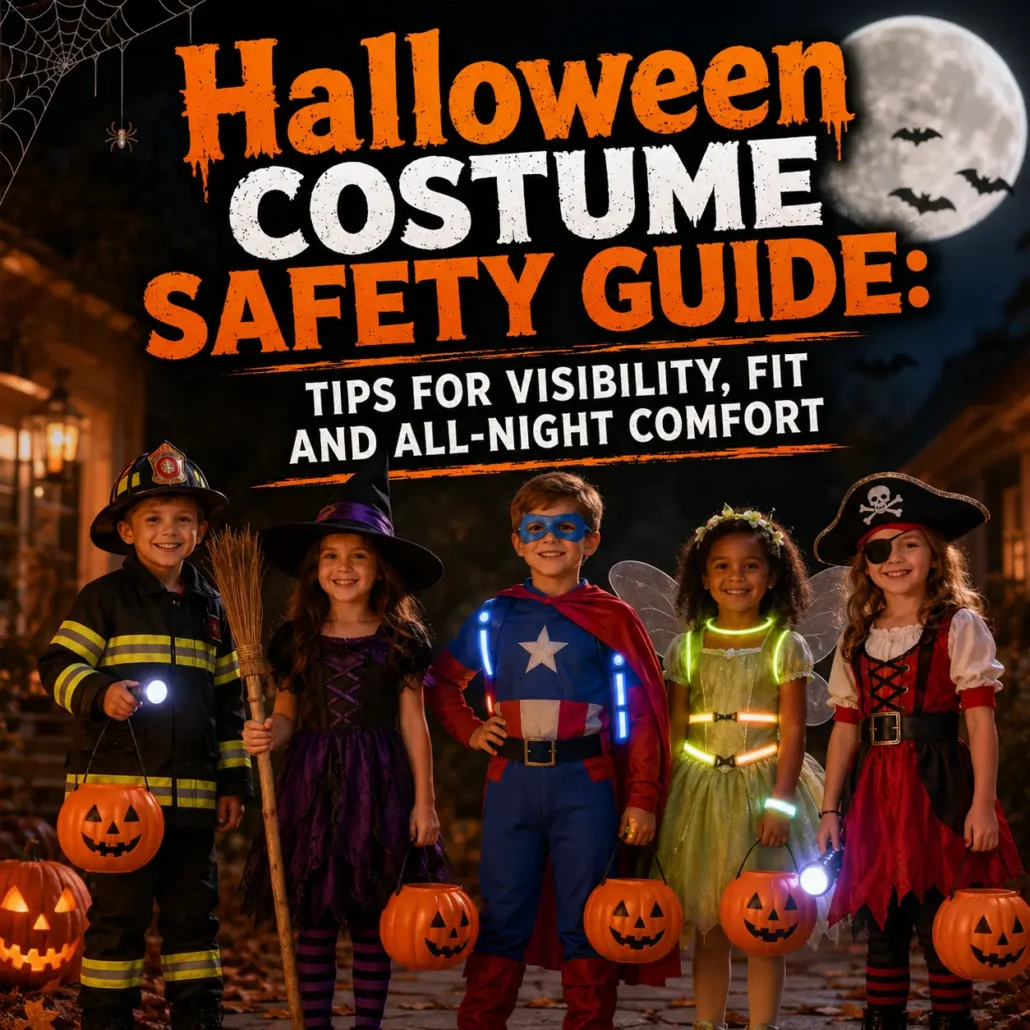
You can also consider reflective costume ideas for children who will be outdoors after sunset. Reflective details can help make a person more visible when light reaches the material. Parents should inspect the complete costume before children leave home.
What Should You Check When Choosing a Halloween Mask?
Masks need more attention than their appearance alone suggests.
- Check Visibility: Look through the mask from the position you will actually wear it. Make sure you can see ahead and to the sides.
- Check Breathing: The mask should allow comfortable airflow. Avoid designs that make breathing difficult.
- Check the Fit: A mask should remain secure without pressing painfully against the face.
- Check Movement: Turn your head from side to side. The mask should stay in position without shifting over your eyes.
If a mask makes it difficult to see or breathe comfortably, consider using face paint instead.
How Can You Make Halloween Wigs Comfortable for Long Events?
A wig can completely change a character’s appearance. However, it should not become a source of discomfort.
Choose a size that fits securely without excessive pressure. If the wig moves while walking, use suitable wig accessories to keep it in place.
Pay attention to the length as well. Long bangs can cover your eyes, while very long hair can become difficult to manage in crowded spaces.
For outdoor events, consider the temperature. A heavy wig can feel warmer after several hours.
What Shoes Are Best for Walking in a Halloween Costume?
Your shoes should support the event rather than simply match the costume.
Look for:
- A secure fit.
- Stable soles.
- Good traction.
- Comfortable support.
- A heel height you can manage.
Avoid wearing completely new shoes for the first time on Halloween night. Wear them beforehand so you can identify pressure points or slipping.
Comfort becomes even more important if you plan to walk while trick-or-treating or attend an outdoor event.
How Can You Stay Comfortable in a Costume for Several Hours?
The right costume depends partly on where you will wear it.
1. Indoor Parties
Crowded rooms can become warm. Avoid unnecessary layers if the costume already provides enough coverage.
2. Outdoor Events
Consider temperature, wind, and possible rain. Choose layers that allow you to stay comfortable without affecting the costume’s fit.
3. Trick or Treating
Choose comfortable shoes and a costume that does not drag or restrict movement. For evening walks, add reflective details so children remain easier to see in low light.
4. Costume Contests
Make sure you can stand, pose, and move without constantly fixing the costume. A comfortable costume is easier to enjoy throughout the night.
How Should You Handle Capes, Trains and Long Costume Pieces?
Long fabric creates a dramatic effect, but it can also create costume trip hazards. Before wearing the costume, check the length while standing and walking. Make sure the fabric does not drag heavily across the floor or cover your shoes.
For children, shorter designs may be easier to manage. Adults wearing long capes or dresses should take extra care around stairs and crowded areas.
If the costume has removable trailing pieces, consider taking them off when moving through crowded spaces.
How Can You Use Reflective Details in a Halloween Costume?
Visibility becomes especially important when costumes are worn outdoors after dark. One option is to add reflective tape or reflective accessories to areas that remain visible while walking. Light colored costume details can also make the outfit easier to notice in low light.
These reflective costume ideas can be particularly useful for children who will be walking near roads. However, reflective elements should complement the costume rather than interfere with movement. Visibility should always be considered alongside costume design.
Are Flame-Resistant Halloween Costumes Safer?
Halloween costumes should be kept away from open flames and other heat sources. When choosing clothing for Halloween, check the product label and follow the manufacturer’s instructions.
A flame-resistant costume can provide additional protection compared with materials that ignite more easily, but it should not be treated as fireproof.
Keep capes, wigs, loose sleeves, and other costume materials away from candles, fireplaces, heaters, and open flames.
Battery-operated candles can also be a practical alternative for Halloween displays and parties.
How Can Makeup and Face Paint Affect Costume Safety?

Face paint can be a useful alternative to masks when visibility is a concern. Use products intended for cosmetic or face use. Do not substitute craft paint or other products that are not designed for skin.
If you are trying a new product, test it before Halloween. This gives you time to identify possible irritations. Keep makeup away from the eyes unless the product is specifically intended for that area. Remove it according to the product instructions after the event.
How Do You Choose Safe Halloween Props?
A prop should enhance the costume without making movement difficult. For children, choose lightweight and age-appropriate options. Avoid sharp edges and objects that could cause injury.
For crowded parties, avoid oversized props that can hit others or block walkways. Outdoor props should also be easy to carry if you plan to move between locations.
If a prop makes it difficult to see, walk, or use your hands normally, it may not be practical for the event.
Which Costumes Need Extra Safety Checks?
Some costume styles require more attention because of their design.
- Full Face Masks: Check vision and breathing before wearing them for an extended period.
- Oversized Costumes: Make sure the extra material does not affect walking or balance.
- Long Dresses and Capes: Check the hem carefully to reduce costume trip hazards.
- High Heels: Test your balance and walking comfort before the event.
- Large Wigs: Check the fit, weight, and visibility around your face.
- Heavy Armor or Props: Make sure you can move normally without becoming fatigued.
How Can You Make Halloween Costumes Safer for Children?
Children may become distracted while trick or treating, so their costumes should be simple to manage. Check the costume from head to toe before leaving:
- Make sure the child can see clearly.
- Check that shoes fit securely.
- Remove loose or sharp accessories.
- Keep costume lengths manageable.
- Consider reflective details for outdoor visibility.
- Choose materials according to the manufacturer’s safety labeling.
A safe Halloween costume guide should always consider the child’s age, activity, and surroundings rather than focusing only on appearance.
What Should You Consider When Buying a Halloween Costume?
Consider the costume’s fit, visibility, comfort, materials, and accessories before buying. Choose a design that allows easy movement and suits the event, weather, and duration of wear.
| Check | What to Ask |
|---|---|
| Fit | Can I move normally? |
| Visibility | Can I see clearly? |
| Comfort | Can I wear it for several hours? |
| Footwear | Can I walk comfortably? |
| Accessories | Will anything fall or catch? |
| Weather | Is it suitable for the event? |
| Materials | Does the label provide relevant safety information? |
| Maintenance | Will I need to adjust it constantly? |
This makes it easier to compare costumes based on both appearance and practicality.
What Should You Do if a Costume Looks Great but Feels Uncomfortable?
You do not always need to replace the entire costume. Small changes can make a major difference.
Replace uncomfortable shoes with a more practical pair. Secure a loose wig. Remove unnecessary accessories. Adjust long fabric where appropriate.
If a mask blocks your vision, consider replacing it with face paint. If the costume feels too warm, remove an unnecessary layer. The aim is to keep the character recognizable while making the outfit easier to wear.
The 10 Minute Halloween Costume Safety Test
A quick test can reveal problems before the event begins. Wear the complete costume and check your visibility, movement, comfort, footwear, and accessories before heading out.
- Minute 1 to 2: Put on the complete costume.
- Minute 3: Walk normally.
- Minute 4: Use stairs.
- Minute 5: Sit and stand.
- Minute 6: Check your peripheral vision.
- Minute 7: Test the wig or headpiece.
- Minute 8: Check shoes and accessories.
- Minute 9: Test the costume outdoors if possible.
- Minute 10: Look for loose, restrictive, or uncomfortable parts.
This simple routine can help catch problems before you spend several hours in the costume.
Where Can You Find Halloween Costumes and Accessories?
Shopping in person can make costume safety checks easier. You can examine the fit, test accessories, compare wigs, and check how different pieces work together before Halloween night.
Kreepy Halloween offers Halloween costumes, wigs, masks, makeup, accessories, and props for different costume styles. Visiting a dedicated Halloween store can also help you find practical alternatives if a particular mask, shoe, or accessory does not feel comfortable.
For shoppers who want to follow practical Halloween costume safety tips, trying the complete look before the event can be just as important as choosing the right character.
Conclusion
A great Halloween costume should help you enjoy the night, not make you spend it fixing your outfit. Check the fit, visibility, footwear, mask, wig, makeup, and accessories before leaving home.
Good Halloween costume safety tips are simple. Test the complete outfit, watch for costume trip hazards, consider visibility outdoors, and choose materials and accessories carefully.
With a little preparation, you can keep the character you love while making the costume easier and safer to wear all night.
FAQs
1. How do you make a Halloween costume more visible at night?
Add reflective tape, reflective accessories, or light colored details to the costume. Small LED accessories can also improve visibility when used safely.
2. What costume materials are flame-resistant?
Some costumes use flame resistant or flame retardant treated fabrics. Always check the product label and follow the manufacturer’s safety instructions before purchase or use.
3. How do you avoid trip hazards with a long costume?
Check the hem before walking and secure excess fabric where appropriate. Avoid dragging capes, trains, or loose material across stairs and walkways.
4. Are Halloween masks safe for full night wear?
They can be, provided they fit properly and allow clear vision and comfortable breathing. Remove the mask if it causes discomfort, overheating, or restricted visibility.
5. What should you check before buying a costume for safety?
Check the size, fit, material labeling, visibility, movement, accessories, and footwear requirements. Make sure the costume suits the event, weather, and wearer’s age.
6. How do you add reflective elements to a costume?
Use reflective tape, patches, trim, or accessories on visible areas such as sleeves, shoes, bags, or outer layers without restricting movement.
7. What costumes are safest for young children?
Choose properly fitted costumes with clear visibility, comfortable shoes, manageable lengths, secure accessories, and age appropriate materials. Avoid sharp or difficult to carry props.
8. How do you keep a costume from restricting vision?
Choose masks with adequate eye openings and secure wigs or headpieces away from the eyes. Test peripheral vision while wearing the complete costume.
9. What accessories pose the biggest safety risk in costumes?
Long capes, oversized props, sharp accessories, loose jewelry, poorly fitted masks, and bulky headpieces can create risks. Choose lightweight, secure, manageable alternatives.
10. How do you stay comfortable in a costume for several hours?
Choose breathable layers, comfortable footwear, and a suitable fit. Test the complete outfit beforehand and consider temperature, movement, and event duration.








Leave a Reply
Want to join the discussion?Feel free to contribute!