
Historical Halloween Costumes for Men: Knights, Vikings & Roman Warriors
A good historical costume has one advantage over most Halloween looks: it already comes with a story.
Walk into a party dressed as a Viking raider, Roman gladiator, or medieval knight, and people immediately understand the character. The trick is choosing the right base outfit, then adding enough armour, texture, accessories, and detail to make the look feel intentional.
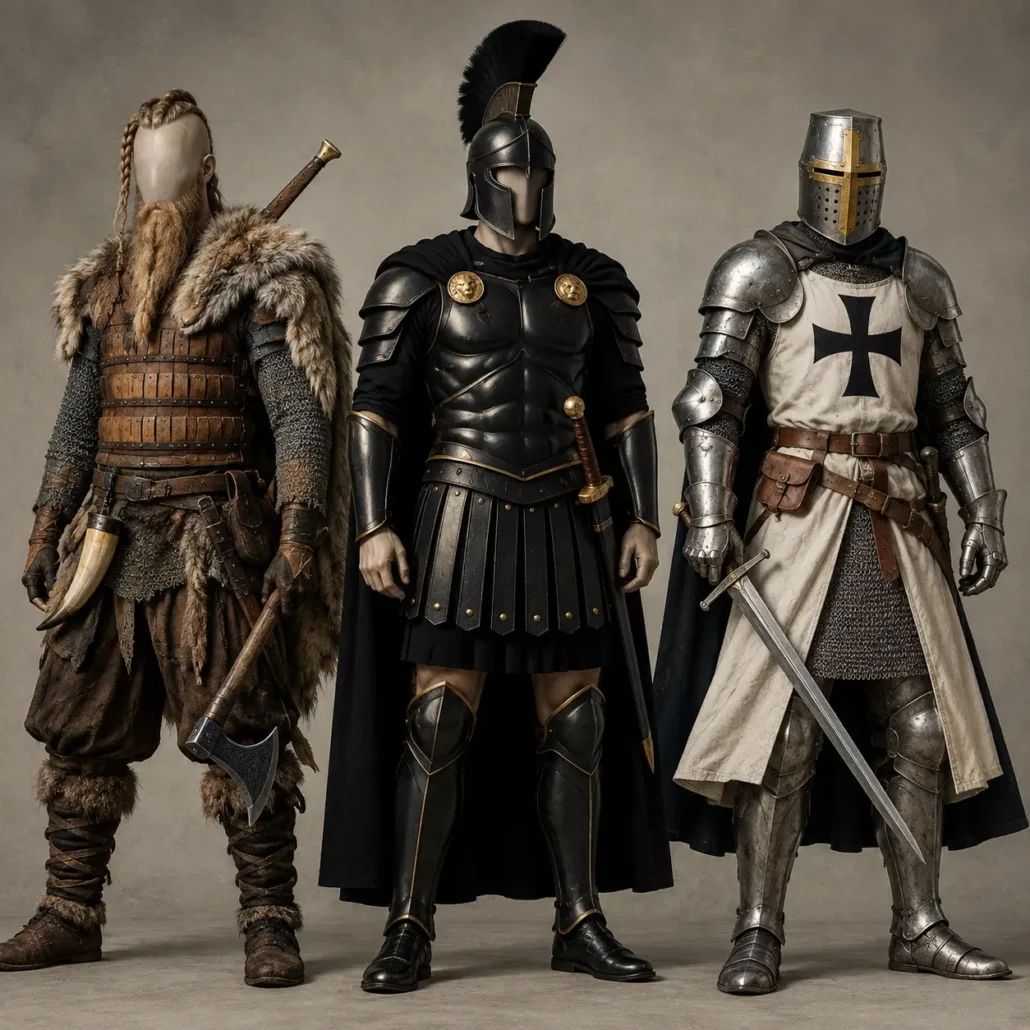
For historical Halloween costumes men, three styles consistently give you the strongest results: Vikings, Romans, and medieval warriors. Each can be assembled from a complete costume or built piece by piece with accessories and props.
Roman and Viking Costume Ideas: Start With the Character You Want to Become
Before buying armour or picking up a sword, decide what kind of warrior you want to portray.
A historical costume can lean in three directions:
- Historically inspired, with recognisable clothing and period-style accessories
- Hollywood-inspired, based on characters such as Ragnar Lothbrok, Maximus, Jon Snow, or Uhtred
- Fantasy historical, where Vikings, knights, and warriors are exaggerated for a dramatic Halloween look
For most parties, the second and third options work particularly well. Historical accuracy matters less than a costume that fits properly and has a clear visual identity.
If you are still narrowing down your look, this guide on choosing the perfect Halloween costume can help you match your costume to the event, comfort level, and character you have in mind.
Go North With a Viking Warrior Costume
The modern Viking Halloween look owes plenty to Vikings, Vikings: Valhalla, and The Last Kingdom.
Ragnar Lothbrok remains a strong reference for a rugged raider costume. Think dark tunics, layered leather, fur accents, arm wraps, and a heavily textured beard. Uhtred offers a slightly different route, mixing Viking and Saxon influences with leather armour, rough fabrics, and a battle-ready appearance.
A convincing Viking costume does not need to look perfectly historical. Focus on layers.
Start with:
- A dark brown, grey, or black tunic
- Leather or faux-leather armour
- Fur or faux-fur shoulder pieces
- Wrapped boots
- Arm bracers
- A wide belt with pouches
- A round shield or costume-safe axe prop
The goal is texture. Smooth, untouched fabric can look like ordinary clothing. Leather straps, rough edges, layered materials, and weathered accessories give the costume more character.
How do you make a DIY Viking costume?
Start with a long, dark tunic or oversized shirt and layer it with a belt, faux fur, arm wraps, and rugged-looking accessories. Brown and grey fabrics work particularly well. Add a round shield or safe costume prop to establish the warrior look.
For a Ragnar-inspired finish, braid sections of longer hair or facial hair and use a small amount of beard oil or styling product to hold the shape.
What accessories complete a Viking warrior costume?
A Viking costume becomes more convincing with a few carefully chosen pieces. A round shield, arm bracers, belt pouch, drinking horn prop, and costume-safe axe can all work.
Avoid loading yourself with every accessory available. Two or three strong pieces usually look better than a belt crowded with unrelated props.
Enter the Arena With a Roman Warrior or Gladiator Costume
Roman costumes can look disciplined and commanding or rough and battle-worn.
If you want the polished military appearance associated with Gladiator or Those About to Die, build around a tunic and armour. A red cape immediately creates a recognisable Roman silhouette.
For a gladiator, the look can be more rugged. Leather harnesses, bracers, greaves, and asymmetrical armour create the impression of an arena fighter.
A Roman-inspired costume often includes:
- A tunic
- Chest armour or a cuirass
- Pteruges around the waist
- Bracers
- Greaves or shin guards
- A cape
- A Roman-style helmet
- A costume-safe sword and shield
Maximus provides useful inspiration for a battle-worn commander look, while Spartacus works better for an arena fighter with exposed arms, leather armour, and heavier accessories.
What does a Roman gladiator costume include?
A Roman gladiator costume usually includes a tunic or loincloth-style base, leather or moulded armour, arm protection, shin guards, and a helmet or headpiece. Add a safe prop sword and shield if appropriate for the event.
You can adjust the amount of armour depending on the setting. A crowded Halloween party may call for lighter pieces that are easier to wear for several hours.
How do you make a Roman soldier costume at home?
Use a red or neutral-coloured tunic as the base. Add strips of faux leather around the waist to imitate pteruges, then layer on a belt, bracers, and a cape.
Craft foam can also be shaped and painted to create lightweight armour. This gives you the Roman silhouette without the weight or cost of heavier costume pieces.
Build a Medieval Knight Costume
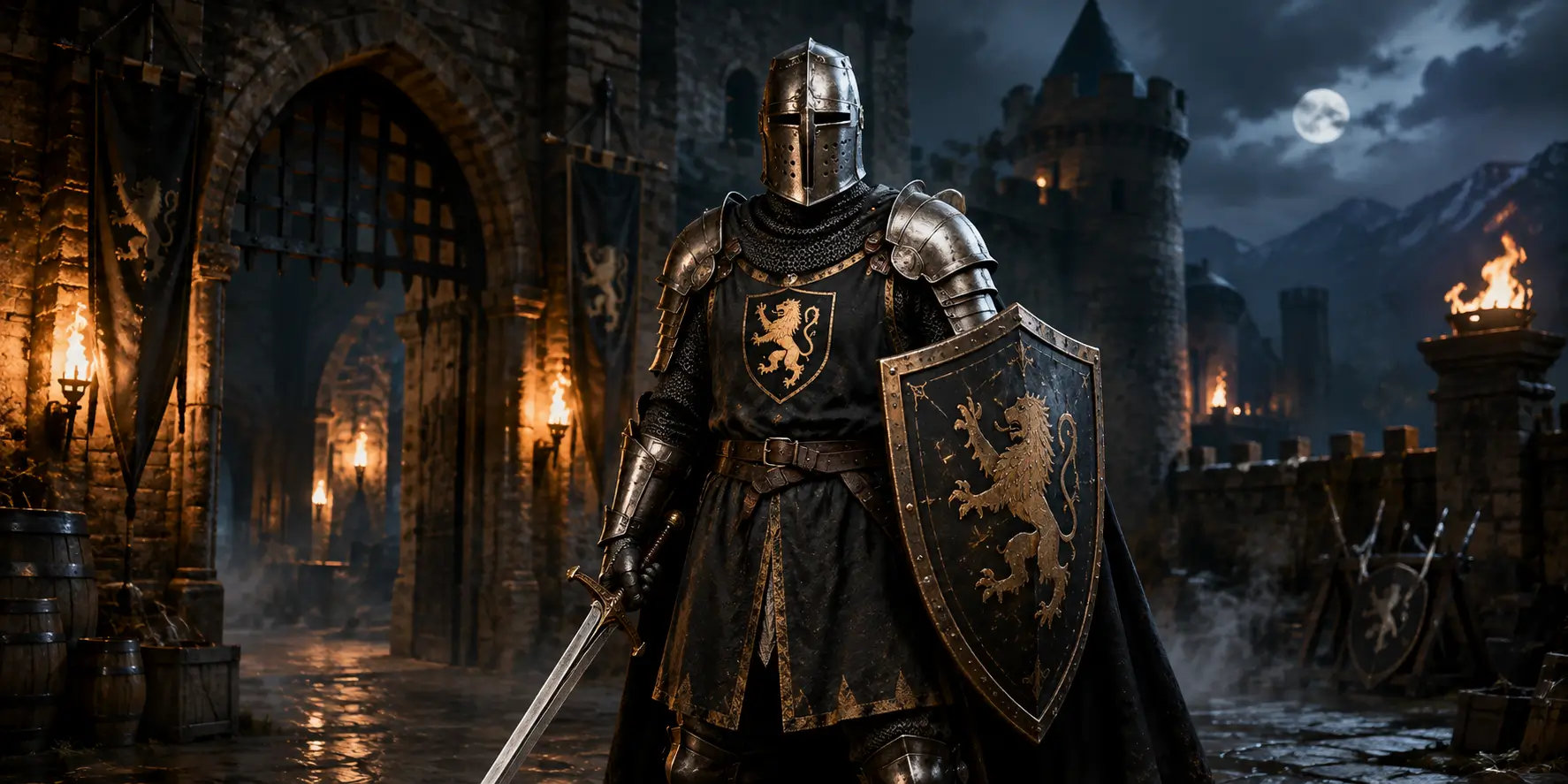
For many men, the knight remains one of the most reliable historical Halloween costumes.
You can go clean and noble with a tabard and heraldic crest, or dark and battle-worn with dented-looking armour, a heavy cloak, and a weathered shield.
Modern pop culture offers plenty of reference points. Jon Snow brings fur, dark clothing, and a northern warrior aesthetic. The Witcher provides a leather-heavy mercenary style, while Game of Thrones offers inspiration ranging from noble knights to heavily armoured fighters.
You can also explore Game of Thrones costume ideas if you want to push your medieval costume toward a recognisable screen-inspired character.
How do you make medieval knight armor for Halloween?
You can create lightweight knight armour with EVA foam or craft foam shaped into chest plates and shoulder guards. Metallic paint and dark weathering can give the material an aged appearance.
Layer the armour over a dark tunic, then add a cloak, belt, and shield. The combination matters more than making every individual piece perfectly detailed.
What weapons or props go with a knight costume?
A costume-safe longsword, shield, mace, or battle axe can complete a knight costume. Choose lightweight props that are suitable for the venue and comply with the rules of the party, school, convention, or event.
A custom crest on a shield can also give the costume a personal identity.
Get the Look: Channeling Your Favorite Screen Warriors
Historical costumes become easier to build when you start with a familiar character blueprint.
You could take inspiration from:
- Ragnar Lothbrok for leather layers, fur, braids, and a raider’s appearance
- Uhtred of Bebbanburg for a rough Viking-Saxon warrior look
- Maximus for Roman armour and a commanding cape
- Spartacus for a stripped-back gladiator costume
- Jon Snow for dark clothing, fur, and a northern warrior silhouette
- Geralt of Rivia for leather armour and a medieval mercenary appearance
You do not need an exact replica. Borrow the visual elements people recognise and adapt them into a costume that works for you.
How Historically Accurate Should a Halloween Costume Be?
For Halloween, recognisability usually matters more than museum-level accuracy.
A historically accurate Viking did not necessarily look like every television Viking, and medieval armour changed considerably across different centuries. Roman soldiers and gladiators also wore equipment that varied by period and role.
If you enjoy historical detail, research the era and build your costume carefully. If you are dressing for a party, use history as the foundation and add cinematic touches that strengthen the visual impact.
That balance usually produces the best result.
What Is a Good Budget-Friendly Historical Costume Idea?
A medieval peasant, Viking scout, Roman citizen, or travelling warrior can be assembled without buying a full armour set.
Start with clothing that gives you the right silhouette. A plain tunic, loose trousers, boots, belt, and cloak can become the foundation for several different characters.
Then spend your budget on one or two visible accessories.
A shield can turn a plain tunic into a warrior outfit. A helmet can push a simple Roman costume closer to a legionnaire. A fur wrap and arm bracers can change ordinary clothing into a Viking-inspired look.
For more ideas on where costume accessories fit into a complete outfit, see this guide to Halloween store accessories.
What Are Good Historical Costume Ideas for Tall or Large Men?
Tall or broad-framed men can use their build to create a strong silhouette.
Heavy knights, Viking berserkers, Roman commanders, and medieval guards all benefit from broader cloaks, larger shields, and layered armour.
The Hound from Game of Thrones offers one example of how a larger frame can support a heavier warrior aesthetic. A long cloak, broad shoulder pieces, and a larger shield can create proportion and make the costume look more deliberate.
Fit matters more than size labels. If possible, try on armour, cloaks, and layered pieces together before Halloween night.
How Do You Style a Beard for a Viking or Knight Costume?
A beard can become one of the strongest visual elements of a Viking or medieval costume.
For a Viking-inspired style, comb the beard, apply a small amount of beard oil or styling balm, and create one or two restrained braids if the length allows. Overdoing the braids can make the look feel more theatrical than warrior-like.
For a knight, a neatly shaped beard often works better. The costume itself can carry the historical character, especially when paired with a helmet or cloak.
If you do not have facial hair, a wig, beard accessory, or helmet can still create a convincing silhouette.
A Men’s Halloween Costume Is Built in Layers
The difference between a forgettable costume and a strong one often comes down to layering.
Start with the base clothing. Add armour or outer layers. Then choose accessories that support the character.
A Viking needs texture. A Roman needs structure. A knight needs a silhouette.
That simple approach gives you room to adapt your costume around your budget, body type, and the event you are attending.
Need More Costume Inspiration?
Whether you are building a warrior from scratch or looking for a complete Men’s Halloween Costume, Kreepy Halloween offers costumes, accessories, wigs, masks, and finishing pieces that can help you put the character together.
If you are looking for a best Halloween costume store experience with a wide selection under one roof, explore your options before settling on the first costume you find. The project brand strategy positions the store around broad costume selection, accessories, and expert guidance.
You can also browse more ideas through this guide on where to get a costume or explore spooky supplies from a Halloween superstore.
For a warrior costume, the final detail is often the one people remember. Choose your era, build the silhouette, add the right accessories, and make the character your own.
FAQ’s
How do you make a DIY Viking costume?
Create a rugged DIY Viking look with a dark tunic, faux-fur layers, leather straps, arm bracers, and a round shield for one of the easiest historical Halloween costumes men can assemble.
What does a Roman gladiator costume include?
Roman and Viking costume ideas often start with armour, and a gladiator costume typically includes a tunic or harness, chest armour, bracers, greaves, a helmet, and a costume-safe sword.
How do you make medieval knight armor for Halloween?
Build lightweight knight armour with EVA foam or craft foam, metallic paint, weathering details, and layer it over a dark tunic to create a convincing Men’s Halloween Costume.
What accessories complete a Viking warrior costume?
Complete a Viking warrior costume with a round shield, arm bracers, belt pouch, faux-fur wrap, drinking horn prop, and a costume-safe axe.
How historically accurate should a Halloween costume be?
Historical Halloween costumes can be historically inspired rather than perfectly accurate, especially when cinematic details make the character more recognisable at a Halloween party.
What is a good budget-friendly historical costume idea?
A medieval peasant, Viking scout, or Roman citizen costume can be created affordably with a simple tunic, loose trousers, belt, boots, and one standout accessory.
How do you make a Roman soldier costume at home?
Make a Roman soldier costume with a red tunic, faux-leather pteruges, belt, bracers, cape, lightweight armour, and a costume-safe shield.
What are good historical costume ideas for tall or large men?
Viking berserkers, heavily armoured knights, Roman commanders, and medieval guards are strong historical costume ideas for tall or large men because cloaks, armour, and large shields complement a broader silhouette.
How do you style a beard for a Viking or knight costume?
Style a Viking beard with beard oil, light texture, and one or two small braids, while a knight costume usually works well with a neatly shaped beard.
What weapons or props go with a knight costume?
Complete a knight costume with a costume-safe longsword, shield, mace, battle axe, or a custom crest that strengthens the medieval warrior look.





Leave a Reply
Want to join the discussion?Feel free to contribute!