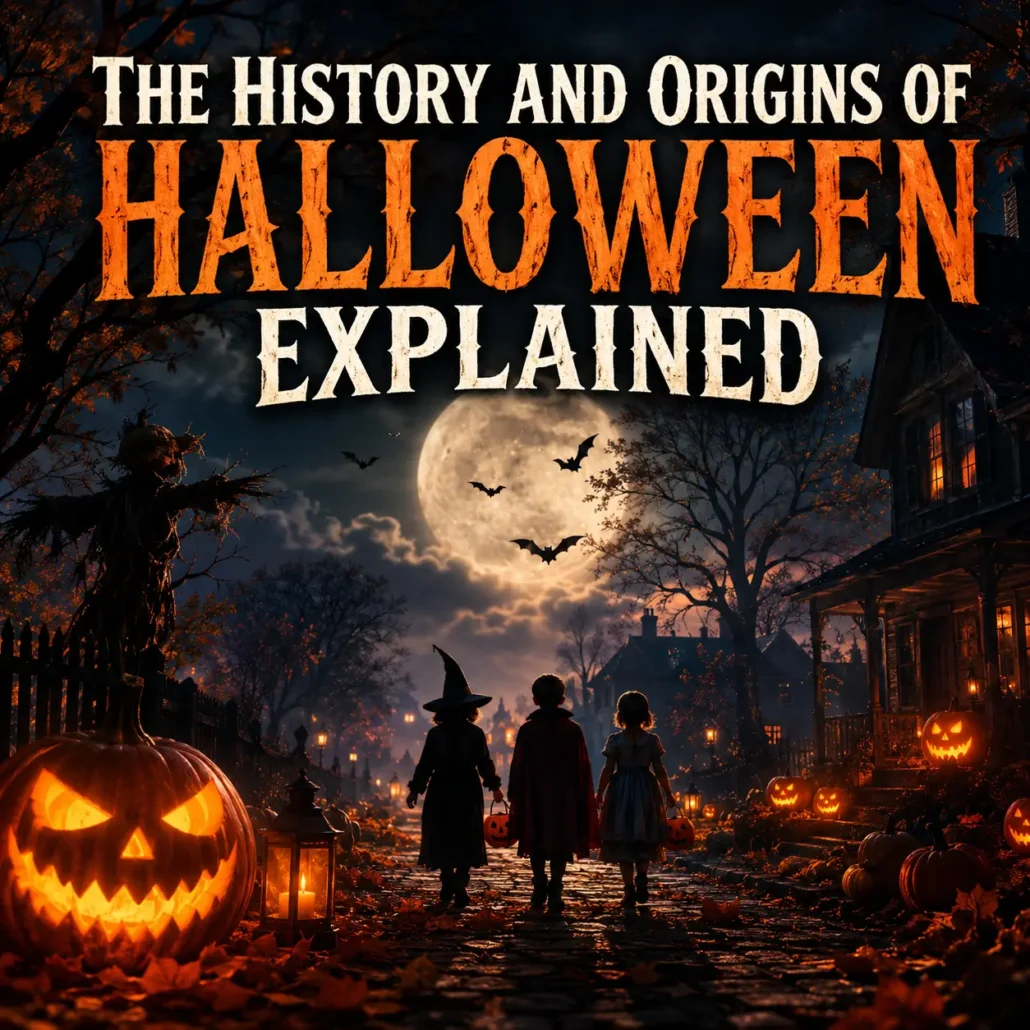
The History and Origins of Halloween Explained: Why We Celebrate It Today
On Halloween night, the familiar world feels slightly wrong.
A quiet street fills with witches, ghosts, monsters, masks, and children who suddenly have somewhere to be after dark. Porch lights glow through the evening, pumpkins stare from windows, and for a few hours, everyone agrees to play along.
It feels modern. The roots are anything but.
The history of Halloween reaches back to ancient seasonal traditions, Christian observances, old folklore, immigration, and generations of storytelling. Along the way, a night associated with the unknown became one of the most recognizable celebrations in modern culture.
To understand why we celebrate Halloween today, you have to go back to the beginning.
The night before Halloween had a different name
Long before pumpkins lined American porches, Celtic communities observed Samhain, a seasonal festival associated with the end of the harvest and the arrival of winter.
The changing season carried more than practical meaning. It marked a shift from the brighter part of the year into a colder, darker period, and traditional beliefs connected this time with the supernatural.
Stories told of spirits and otherworldly beings moving through the world. Fires, rituals, and disguises became part of the customs surrounding the night.
Those ideas would not disappear.
They would change shape.
What is Samhain and how is it connected to Halloween?
Samhain was not simply Halloween under an older name. The holiday we know today developed through several traditions that gradually became intertwined.
Christian observances helped shape the calendar. All Saints’ Day fell on November 1, making the preceding evening All Hallows’ Eve. Over time, that name became Halloween.
Older beliefs surrounding spirits, darkness, disguise, and the changing season remained part of the cultural memory surrounding the night.
That mixture explains much of Halloween’s character today. Its history contains religious tradition, seasonal customs, folklore, and the simple human pleasure of telling a frightening story after dark.
Why is Halloween celebrated on October 31?
October 31 became associated with Halloween because it falls on the evening before All Saints’ Day.
The date also sits close to the older seasonal festival of Samhain and its association with the transition into winter.
There is something fitting about the timing. Days grow shorter, darkness arrives earlier, and autumn is already changing the world outside your window.
Halloween has always known how to make use of that atmosphere.
Why do we dress up for Halloween?
The history of the Halloween costume starts with disguise.
Older traditions included people disguising themselves as supernatural beings or animals. In a world where people believed spirits could move among the living, taking on another appearance had a practical and supernatural meaning.
The idea changed as Halloween itself changed.
Disguise became part of celebration. The celebration became a costume. Costumes became a way to tell a story without saying a word.
A person could arrive as a witch, vampire, ghost, skeleton, monster, hero, villain, or something nobody has seen before.
That is how the costume became an integral part of Halloween culture.
Today, the costume does something even more personal. It gives people a chance to step outside their everyday identity and try on another one for the night.
That might explain why costumes remain such a powerful part of the holiday. The appeal is not limited to looking different. It is the chance to become different, even if only until midnight.
For families choosing costumes together, our guide to kids’ Halloween costumes explores how modern costumes continue to shape the way children experience the holiday.
Halloween became a language for horror
Once Halloween had accumulated masks, supernatural stories, dark nights, and mysterious characters, popular culture had everything it needed to build new kinds of horror.
Movies made that world familiar.
John Carpenter’s Halloween placed Michael Myers in an ordinary American suburb where trick-or-treaters move through the streets while something dangerous watches from the shadows.
“It’s Halloween. Everyone’s entitled to one good scare.”
The line became part of the film’s lasting mythology because it captures the strange agreement at the heart of Halloween. We know the night is supposed to frighten us, and we show up anyway.
Later films pushed the idea in very different directions.
Terrifier 2 turns Halloween into the setting for extreme slasher horror. Haunt takes the familiar haunted-house attraction and removes the safety net. Scary Stories to Tell in the Dark returns to old houses, cursed stories, and creatures that feel like they escaped from folklore.
Late Night with the Devil takes another familiar Halloween ingredient, the television special, and turns a night of entertainment into something much darker.
The stories change with the times.
Halloween remains the setting where ordinary life can become frightening.
From haunted houses to modern Halloween culture
Television has continued exploring the darker side of the holiday.
Chilling Adventures of Sabrina draws from witchcraft, ritual, and supernatural traditions. Channel Zero: No-End House takes the haunted attraction and turns it into psychological horror.
Comics have done something similar.
The Autumnal finds horror in the beauty of autumn itself, while Something Is Killing the Children builds on a childhood fear that has existed for generations: what if something really is hiding in the dark?
Halloween gives storytellers a familiar set of symbols to work with. A mask can hide a face. A costume can hide an identity. A house can hide something inside it.
The symbols remain recognizable even when the stories around them change.
That is one reason Halloween continues to influence horror long after October ends.
How did jack-o’-lanterns become a Halloween tradition?
The pumpkin was not always Halloween’s signature decoration.
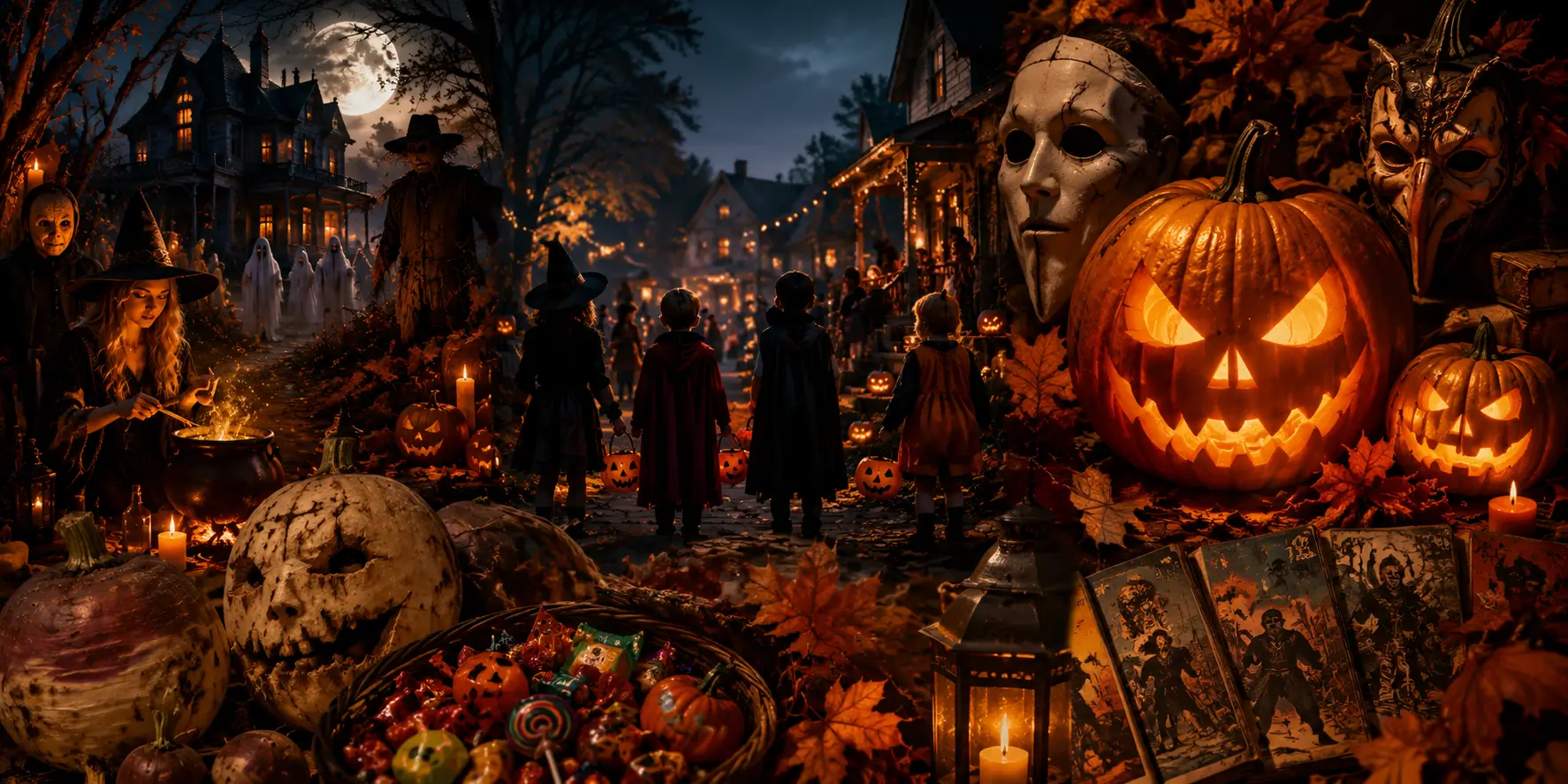
Irish traditions included carving turnips and other vegetables into lanterns. These customs became associated with Halloween folklore and the story of Stingy Jack, a legendary figure said to have tricked the Devil.
According to the tale, Jack was condemned to wander with a burning coal inside a carved turnip.
When Irish immigrants brought their traditions to America, pumpkins offered a better material for carving. They were larger, easier to hollow out, and far more suited to creating the grinning faces that now appear on porches every October.
The jack-o’-lantern became part of Halloween’s visual identity.
A pumpkin had become a face.
Why do we go trick-or-treating?
The modern phrase “trick or treat” has older roots.
Traditions such as souling and guising involved people visiting homes and receiving food or treats in exchange for prayers, songs, performances, or other acts.
The custom changed as it travelled and developed.
In America, children began dressing up and going from house to house for treats. Costumes gave the tradition its theatrical quality, while the promise of candy made the ritual irresistible to children.
The result is one of Halloween’s most recognizable scenes.
A child in costume stands at a stranger’s door after dark, says the familiar words, receives a treat, and disappears toward the next porch light.
It is simple.
It also carries traces of a much older Halloween tradition: crossing the threshold between the ordinary and the unfamiliar.
How did Halloween become popular in the United States?
Halloween traditions arrived in America through European immigration and gradually mixed with local customs.
The holiday changed as it became more deeply rooted in American communities. Older religious and seasonal associations remained, but costumes, parties, decorations, storytelling, and trick-or-treating became increasingly central to the celebration.
That change gave Halloween room to become whatever a community wanted it to be.
Families created their own traditions. Children chose who they wanted to become. Adults turned homes into haunted settings and parties into elaborate scenes.
The holiday became less tied to a single ritual and more open to interpretation.
That is why Halloween can feel ancient and completely modern at the same time.
Why are black and orange the traditional Halloween colors?
Black and orange fit Halloween because they belong to the season.
Black recalls the night, shadows, mystery, and the unknown. Orange brings to mind pumpkins, autumn leaves, harvest, fire, and the last warmth before winter.
Together, they create the visual mood people now recognize instantly as Halloween.
The colors do not need an explanation when they appear together.
You simply know what time of year it is.
How Halloween became the holiday we know today
The origin of Halloween cannot be reduced to a single event.
It developed through layers of tradition.
Samhain brought seasonal and supernatural associations. Christian observances influenced the calendar and the name. European customs introduced traditions involving disguises, door-to-door visits, and lanterns.
American culture changed them again.
Turnips became pumpkins. Disguises became costumes. Door-to-door traditions became trick-or-treating. Folklore found new life in movies, television, comics, haunted attractions, makeup, and modern storytelling.
Costumes became especially important because they gave people a physical way to participate in the fantasy.
The old idea of disguise survived, but its purpose changed. People could now choose a character because it amused them, frightened others, reflected their interests, or simply gave them an excuse to become someone different for one night.
That same tradition continues in today’s costume culture, from classic monsters to characters pulled straight from popular culture. You can see that shift in our guide to viral Halloween costumes and 2026 trends.
Halloween did not remain relevant by standing still.
It kept changing with the people who celebrated it.
Why do we celebrate Halloween?
We celebrate Halloween because it gives ordinary life a temporary change of scenery.
A house becomes a haunted house. A pumpkin becomes a face. A familiar person becomes a character. A neighborhood that looks completely normal during the day feels different after sunset.
There is freedom in that.
For one night, imagination gets to take over the rules.
That may also explain why Halloween has such a strong connection with horror. We enjoy the feeling of being frightened when we know we can eventually turn the lights back on.
The costume lets us enter the story.
The decoration creates the setting.
The story gives the night its mood.
And when those pieces come together, Halloween becomes something people remember.
Make Halloween worthy of the night
The history of Halloween is full of things that changed shape.
A seasonal festival became a holiday. A disguise became a costume. A turnip became a jack-o’-lantern. Old folklore became modern horror.
The same idea still drives the way we celebrate.
You choose what you want the night to feel like, then build it around the details. A costume can establish the character. The right décor can change the room. A few carefully chosen touches can make a familiar space feel like somewhere else entirely.
If you are creating that atmosphere at home, explore these haunted house Halloween decorations for ideas that can take a setting beyond the ordinary.
At Kreepy Halloween, that spirit sits at the heart of what we do. We believe Halloween should be built around authentic costumes and décor that make the experience feel extraordinary, not disposable.
So choose the character carefully.
Give the night a little imagination.
Make it worthy of Halloween.
Frequently Asked Questions
What is the true origin of Halloween?
Halloween developed from several traditions, including Samhain and later Christian observances connected with All Saints’ Day.
What is Samhain?
Samhain was a Celtic seasonal festival associated with the end of the harvest and the beginning of winter.
Why do we dress up for Halloween?
Costumes grew from older traditions involving disguise and supernatural beliefs. They later became a central part of Halloween entertainment and self-expression.
Why is Halloween celebrated on October 31?
October 31 is the evening before All Saints’ Day and became associated with All Hallows’ Eve and older seasonal traditions.
How did jack-o’-lanterns become a Halloween tradition?
Irish traditions involved carving turnips into lanterns. Pumpkins later became popular in America because they were larger and easier to carve.
Why do we go trick-or-treating?
Trick-or-treating developed from older door-to-door customs involving food, treats, prayers, songs, and performances.
When did Halloween become popular in the United States?
Halloween traditions came with European immigrants and gradually developed into the community-centered celebration familiar in America today.
What religious origins does Halloween have?
Halloween has both older Celtic and Christian influences. Its modern form developed through the blending of these traditions.
How has Halloween changed over the last century?
Halloween evolved from older seasonal and religious customs into a broader celebration centered on costumes, trick-or-treating, decorations, parties, entertainment, and horror.




Leave a Reply
Want to join the discussion?Feel free to contribute!