
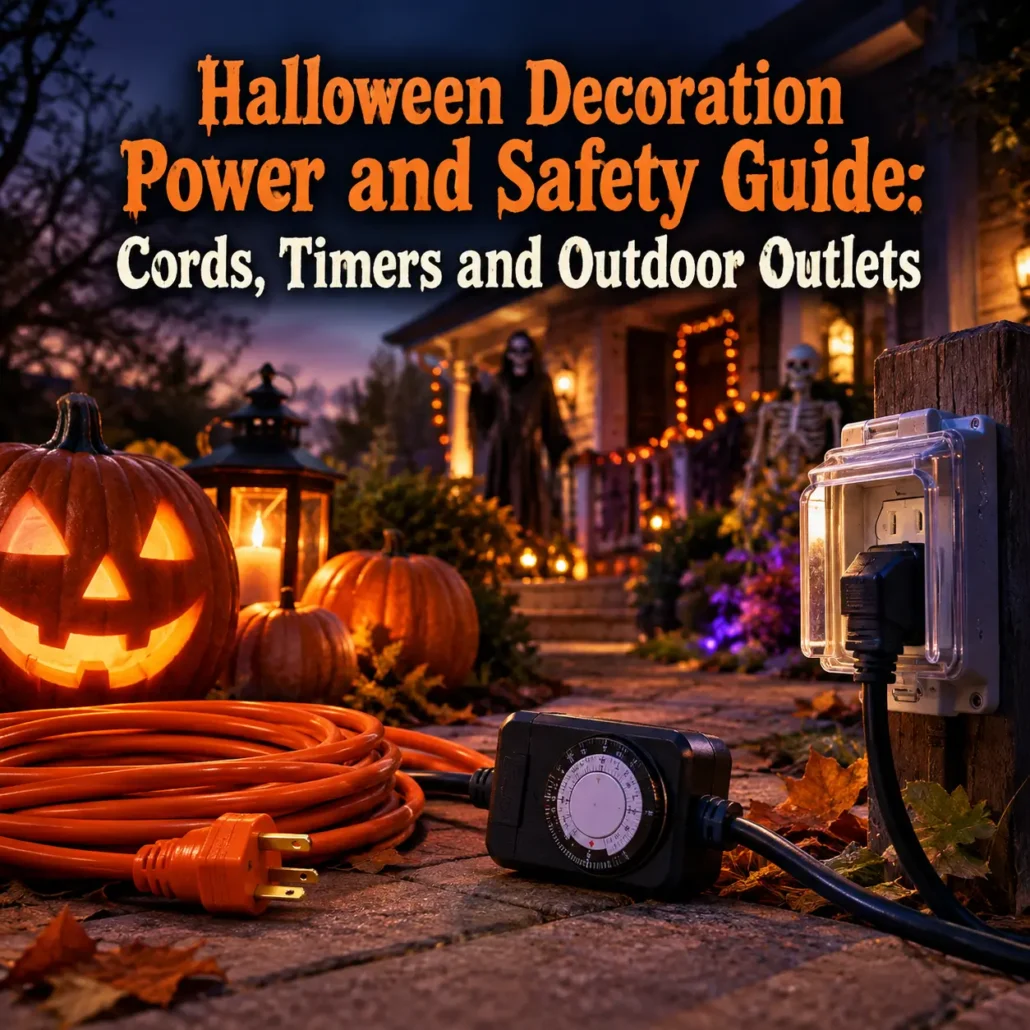
Halloween Decoration Power and Safety Guide: Cords, Timers and Outdoor Outlets
A spectacular Halloween display can turn eerie for the wrong reasons when a cord overheats, a connection gets soaked, or an overloaded outlet shuts everything down. Good Halloween decoration electrical safety starts before the first prop reaches the lawn.
For most residential displays, use outdoor-rated cords, GFCI-protected outlets, properly rated timers, and a clear power plan. Keep connections protected from moisture and route every cord away from walking paths.
If your display includes lighting, animated props, inflatables, or fog equipment, plan the electrical layout alongside the decorations. That small step can keep an extraordinary display safe throughout the season.
What extension cords are safe for outdoor Halloween use?
The safest outdoor extension cords for Halloween decorations are specifically marked for outdoor use and rated to handle the electrical load of the equipment connected to them. Outdoor-rated cords are designed for conditions such as moisture and temperature changes.
Look for outdoor-use markings on the cord or packaging. UL guidance notes that cords evaluated for outdoor use can carry a “W” in their type designation, such as SJTW.
Before connecting a decoration, check:
- The cord is rated for outdoor use.
- Its current rating matches the connected equipment.
- The insulation has no cuts, cracks, or exposed wiring.
- The cord reaches the outlet without being stretched tightly.
- The manufacturer’s instructions permit outdoor use.
Never substitute an indoor extension cord simply because it reaches the outlet.
How do you avoid overloading an outdoor outlet with decorations?
Halloween decoration electrical safety begins with understanding the total electrical load, not simply counting plugs.
Add the wattage or amperage of every decoration that will operate at the same time. Then compare that demand with the ratings of the circuit, receptacle, extension cords, and other equipment already connected.
A simple power map can help:
- List every powered decoration.
- Record its wattage or amperage.
- Add simultaneous loads.
- Check circuit and cord ratings.
- Follow manufacturer instructions.
- Consult a qualified electrician if the planned load exceeds the installation’s safe capacity.
Never try to solve an overloaded circuit by adding adapters or daisy-chaining extension cords.
What timers work best for automating decoration lighting?
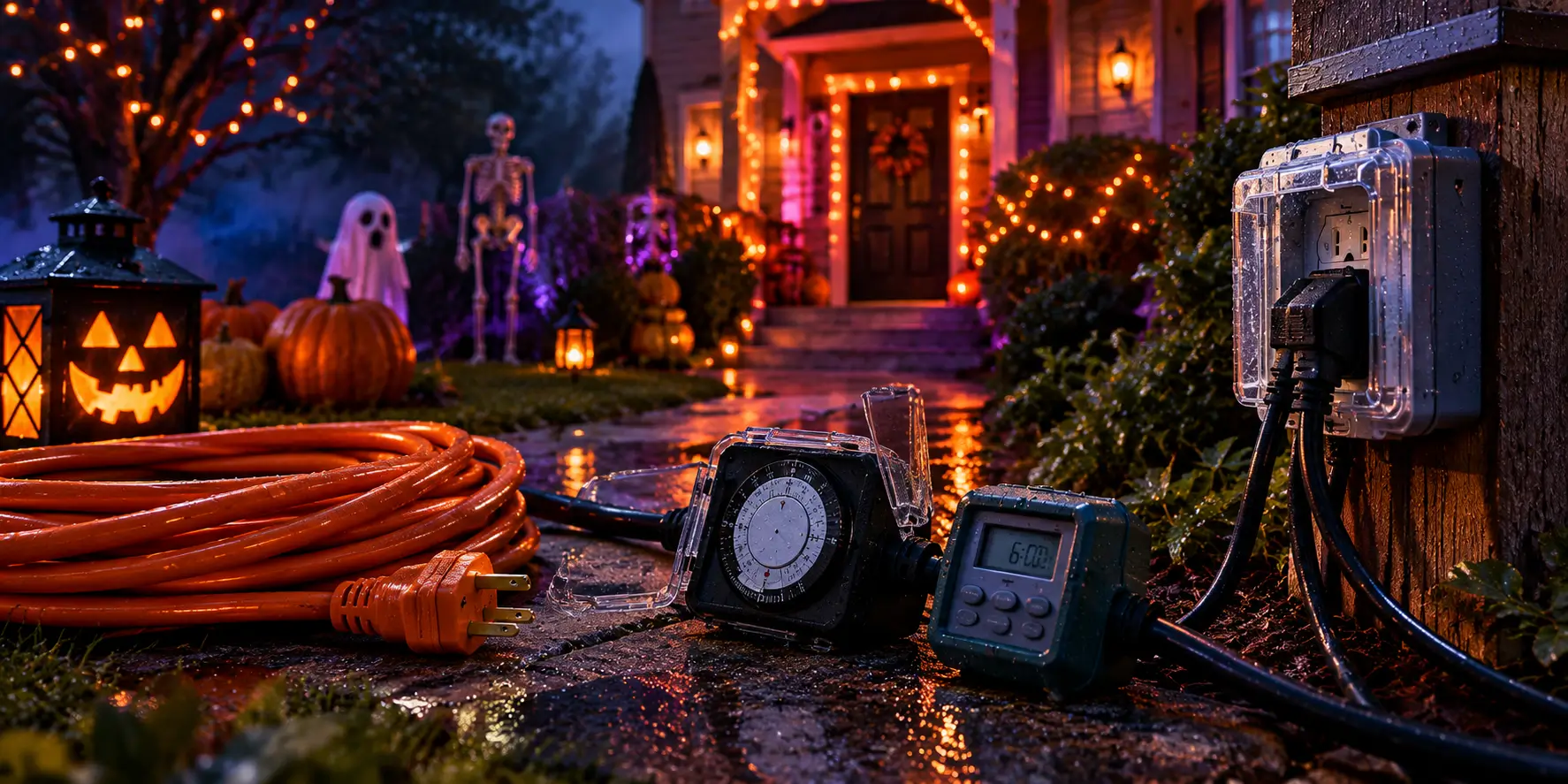
A good decoration timer guide starts with the timer’s location and load rating. Outdoor displays need timers approved for outdoor use and capable of handling the connected decorations.
Mechanical timers work well for simple schedules, while digital timers offer more precise operating times. Smart timers can also be useful when they are specifically designed for the intended outdoor application.
Set decorations to switch off automatically when the display no longer needs to operate. For larger installations, check the timer’s load rating carefully before connecting several animated props or other high-demand equipment.
How do you keep cords safe from rain and moisture?
Water and electricity are an unforgiving combination. Proper Halloween decoration electrical safety means using outdoor-rated equipment and GFCI-protected circuits.
Keep plug connections elevated and away from standing water. Use suitable covers designed for outdoor electrical connections when appropriate, and never leave a connection sitting in a puddle.
These outdoor outlet safety tips also matter after installation:
- Keep connections away from standing water.
- Never use damaged cords.
- Do not handle electrical connections with wet hands.
- Follow the manufacturer’s placement instructions.
- Stop using equipment if water enters a component not rated for it.
- Inspect the setup after severe weather.
Do not try to make an ordinary cord “waterproof” through improvisation. Use equipment designed for the environment.
What’s the maximum wattage for typical outdoor decoration setups?
There is no single safe wattage for every Halloween display. A typical residential circuit may be rated at 15 or 20 amps, but usable capacity depends on the circuit, voltage, existing loads, equipment ratings, wiring, and applicable requirements.
For example, a 120-volt, 15-amp circuit has a nominal capacity of 1,800 watts. That does not mean you should simply fill the circuit to 1,800 watts with decorations.
Consider a display using:
- LED lighting: 150 watts
- Animated prop: 250 watts
- Inflatable: 300 watts
- Fog machine: 400 watts
The combined load is 1,100 watts before anything else operating on that circuit is considered. The actual installation still needs to remain within its electrical limits.
How do you hide cords for a cleaner decoration display?
The cleanest cord is one that never crosses the path your guests use.
Plan your electrical route before placing decorations. Run cords around the perimeter where possible, keep them away from sidewalks and stairs, and avoid loose loops that visitors could catch with a shoe.
For a cleaner display:
- Route cords behind props or along lawn edges.
- Use appropriate outdoor cord covers where pedestrian traffic cannot be avoided.
- Secure cords without piercing or crushing the insulation.
- Keep connections accessible for inspection.
- Separate electrical routes from guest areas.
Never hide cords beneath rugs or secure them with nails or staples. A polished display should still allow easy inspection and maintenance.
Are outdoor-rated cords different from standard extension cords?
Yes. Outdoor-rated cords are designed for conditions that ordinary indoor cords are not intended to handle.
Outdoor use can expose wiring to moisture, sunlight, temperature changes, and mechanical wear. Markings such as a “W” designation can help identify cords evaluated for outdoor use.
For Halloween decoration electrical safety, always check the cord markings and product instructions rather than relying on appearance.
What safety certifications should decoration cords have?
Look for electrical products evaluated by recognized testing or certification organizations. In the United States, familiar marks include UL, ETL from Intertek, and CSA.
Check the actual product, packaging, markings, and instructions rather than relying on a logo alone. Damaged insulation, exposed wires, loose connections, or signs of overheating are reasons to replace a cord.
How do you prevent a trip hazard with decoration wiring?
Treat every exposed cord as part of the physical layout. Walk through the display in daylight and check the routes children, guests, neighbors, and vehicles may use.
Keep wiring:
- Away from sidewalks and steps.
- Out of doorways and gates.
- Clear of children’s play areas.
- Away from driveways where vehicles may cross.
- Secured without damaging insulation.
- Accessible enough for inspection.
Good Halloween decoration electrical safety should never depend on guests noticing a hidden hazard.
What’s the safest way to power multiple large props at once?
Treat multiple large props as one complete electrical load. Check each prop’s requirements, identify which devices operate simultaneously, and determine how much capacity the relevant circuit and cords can safely handle.
Follow manufacturer instructions for animated props, inflatables, fog machines, and other equipment with motors or higher electrical demands. Avoid overloaded outlets, incompatible adapters, and improvised electrical distribution.
If the display exceeds the capacity of the existing installation, consult a qualified electrician rather than modifying safety devices or creating a makeshift setup.
Build the Display Around Safety First
The best Halloween displays look effortless because the planning happens before the lights switch on. Choosing the right cords, calculating the load, protecting connections, setting operating times, and clearing walking routes all contribute to Halloween decoration electrical safety.
Once the electrical foundation is right, you can concentrate on the atmosphere. Kreepy Halloween offers Halloween decorations, outdoor lawn and patio decorations, animated props, and Halloween lighting and special effects to help build the visual side of your display.
Your Halloween Power Safety Checklist
Before powering up the full display, confirm:
- Outdoor-rated cords are being used where required.
- Cords and decorations show no visible damage.
- Outdoor equipment has appropriate GFCI protection.
- The combined electrical load has been checked.
- Timers are rated for the intended use and load.
- Connections are protected from moisture.
- No cord creates an unprotected trip hazard.
- Cords are not covered, crushed, stapled, or nailed.
- Extension cords are not being used as an improvised distribution system.
- Manufacturer instructions have been followed.
Ready to Build a Safer, More Extraordinary Display?
Once the power plan is settled, the fun begins. Explore Kreepy Halloween’s curated range of Halloween decorations, lighting and special effects, and fog machines and juice to create a display with atmosphere as well as scale.
The best displays do more than fill a yard. They transform it.
Kreepy Halloween — Where Every Shadow Sparks a Scare.
FAQ
Can LED Halloween lights reduce the electrical load?
LED Halloween lights generally use less electricity than comparable traditional incandescent lights. Check the wattage listed on each product and include the actual load when planning your display.
Should Halloween decorations be unplugged during severe weather?
Follow the manufacturer’s instructions and local safety guidance. If severe weather creates a risk of water exposure, flooding, or damaged equipment, turn off and disconnect decorations when it can be done safely.
Can outdoor Halloween decorations stay plugged in overnight?
Only if the equipment and electrical setup are specifically suitable for the intended operating period. Using a properly rated outdoor timer can help limit operating hours and reduce unnecessary runtime.
How often should Halloween decoration cords be inspected?
Inspect cords and connections before installation and periodically throughout the display season. Check for cuts, cracking, exposed wiring, loose connections, moisture, or signs of overheating.
Can Halloween inflatables use the same circuit as decorative lights?
They may be able to share a circuit if the combined electrical load remains within the safe capacity of the circuit and all equipment is used according to its manufacturer’s instructions. Check the power requirements before connecting them.
What should you do if a Halloween decoration cord becomes hot?
Stop using the equipment and disconnect it safely if you can do so without touching a damaged or unsafe connection. Check the equipment, cord, and electrical load, and consult a qualified electrician if the cause is unclear.
Can outdoor Halloween decorations be connected to a power strip?
Only use a power strip if it is specifically rated and approved for the intended outdoor application and electrical load. Never use an indoor power strip outdoors.
How far should Halloween electrical cords be kept from heat sources?
Keep cords and electrical connections away from heat sources and follow the clearance requirements provided by the equipment manufacturer. Do not route cords against hot equipment or surfaces.
What should you do with Halloween decorations after rain?
Inspect decorations, cords, plugs, and connections for moisture or damage before restoring power. Do not use equipment that has been damaged or exposed to water in a way that is not permitted by the manufacturer.
How should Halloween electrical decorations be stored after the season?
Disconnect equipment, allow components to dry as directed, inspect cords for damage, and store decorations in a clean, dry location. Avoid tightly bending or crushing electrical cords during storage.





Leave a Reply
Want to join the discussion?Feel free to contribute!