

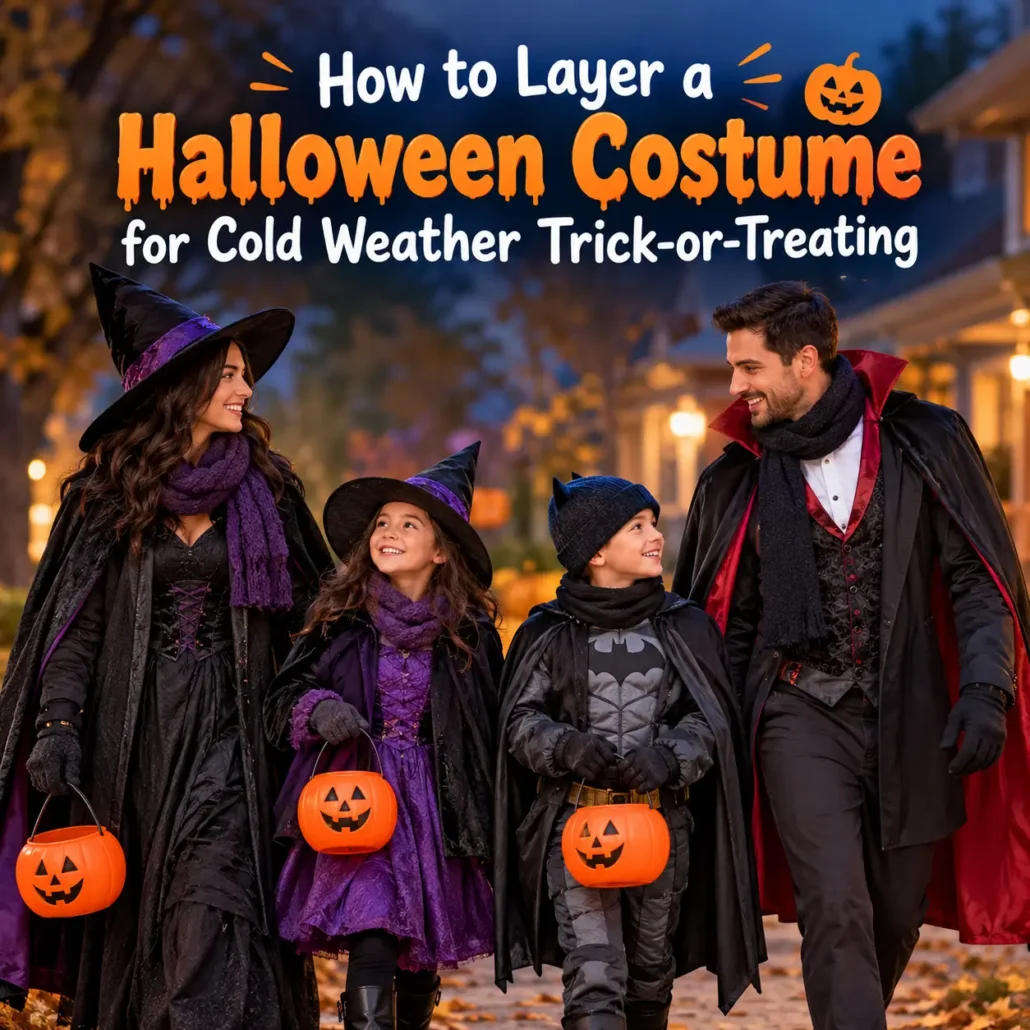
How to Layer a Halloween Costume for Cold Weather Trick-or-Treating
A Halloween costume can look perfect in the mirror and fail the moment you step outside.
The cape starts looking dramatic until the wind gets underneath it. A short dress works beautifully indoors, then leaves your legs freezing halfway through the neighborhood. Kids rarely notice the temperature at first. Twenty minutes later, they are asking when they can go home.
The solution is not covering the costume with a giant coat.
It is layering underneath and around the costume without changing its silhouette. With the right base layer, outer layer, and accessories, you can build a cold weather Halloween costume that stays warm while still looking like the character you planned.
Here is how to layer a costume for cold weather without turning your carefully styled look into a pile of winter clothes.
How do you stay warm in a costume without ruining the look?
Start with thin, fitted layers underneath the costume rather than adding bulky clothing over it. A thermal shirt, leggings, tights, or fitted base layer can provide warmth while keeping the costume’s original shape visible.
The key is to think from the inside out.
If your Halloween costume is a thin witch dress, for example, a fitted thermal top underneath is much less disruptive than wearing a sweatshirt over the dress. Black thermal leggings can disappear beneath a long skirt or robe, while fleece-lined tights can add warmth beneath shorter costumes without changing the character.
For costumes with exposed arms, consider a fitted long-sleeve layer in a color that blends with the costume. A black layer works naturally under many gothic, witch, vampire, and villain costumes.
The same principle works for kids. Instead of sizing up the entire costume to accommodate winter clothing, choose a costume with enough room for a slim base layer underneath.
The goal: keep the warmth close to the body and the costume’s silhouette intact.
What base layers work well under thin costumes?
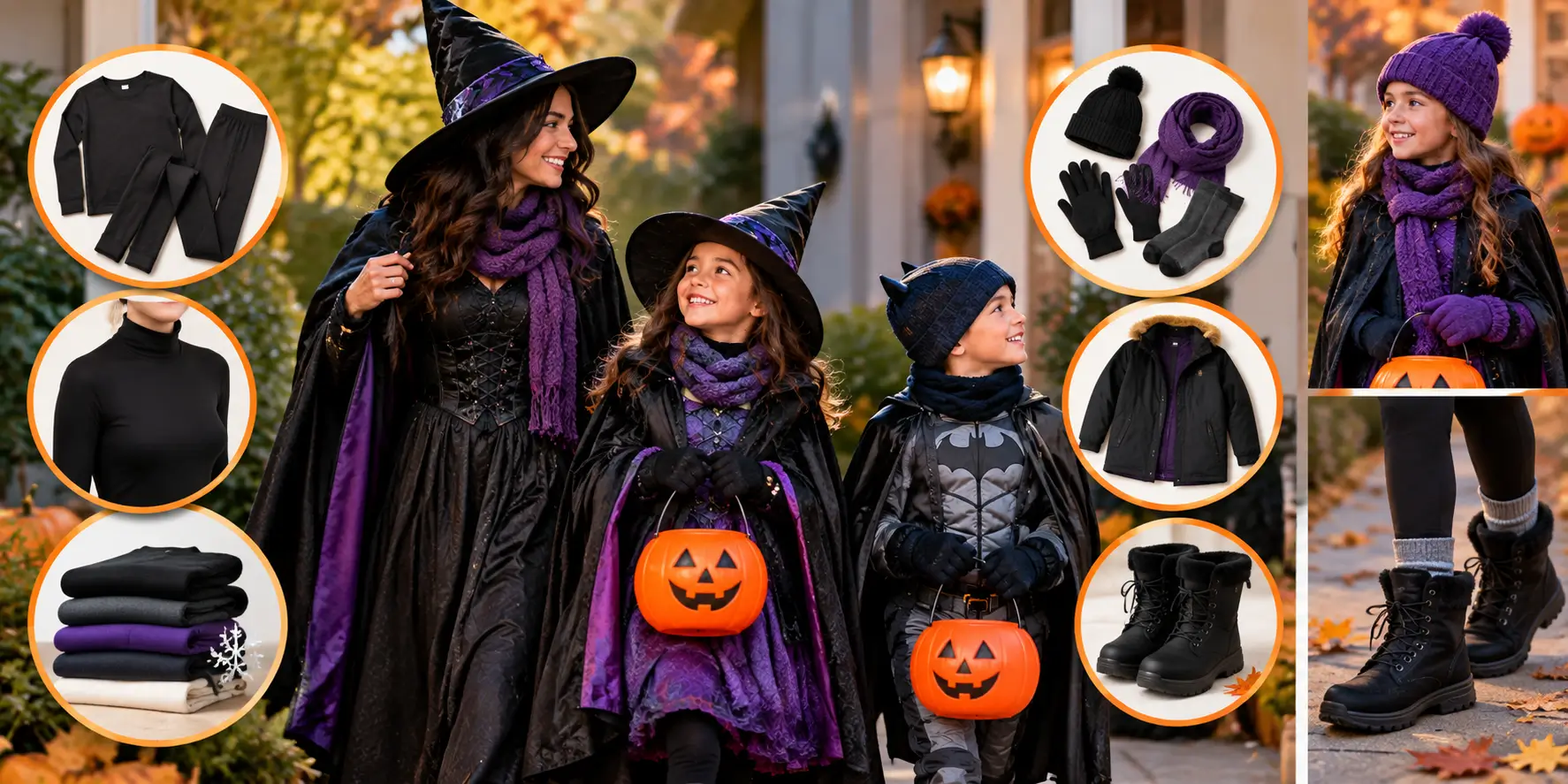
Thin thermal tops, fitted leggings, tights, and moisture-managing base layers work particularly well under lightweight costumes. Choose pieces that sit close to the body without creating visible bunching around the waist, neckline, or sleeves.
A cold-weather Halloween costume becomes much easier to manage when the first layer does most of the work.
For adults, a lightweight thermal shirt can disappear beneath dresses, jumpsuits, tunics, robes, and character uniforms. Thermal leggings can provide another layer beneath skirts, shorts, or wide-leg costume trousers.
For children, prioritize comfort. A scratchy thermal layer will become a problem long before the cold does. Soft synthetic blends or comfortable performance fabrics can work well when they fit properly.
Avoid stacking several loose shirts. Multiple oversized layers create folds that can show through the costume and make movement awkward.
Instead, use one close-fitting warm layer and build outward.
For costumes with a very specific neckline, check the collar before choosing the base layer. A high-neck thermal may work beautifully under a witch costume but become obvious beneath a low-cut fantasy or superhero design.
How do you layer a Halloween costume without adding bulk?
Use thin layers in strategic places rather than adding thickness everywhere.
Most people do not need equal insulation across their entire body. Your torso, hands, head, and feet often deserve more attention than adding another thick layer underneath the costume itself.
A useful layering formula is:
- Base: fitted thermal shirt or long-sleeve layer
- Legs: tights, leggings, or thermal bottoms
- Costume: the character layer
- Outer protection: a removable jacket, cape, robe, or cloak when appropriate
- Accessories: gloves, socks, scarf, or hat that complement the character
Think about where the costume has visual flexibility.
A long robe can conceal warm leggings easily. A flowing cape can accommodate a fitted jacket underneath. A skirt may allow fleece-lined tights. A jumpsuit may have enough room for a thin thermal layer.
The trick is choosing one effective layer instead of several mediocre ones.
Before Halloween night, put the complete outfit on at home. Sit down. Walk around. Raise your arms. Bend your knees. If the costume pulls or bunches before you even leave the house, adding another layer will only make the problem worse.
What accessories keep kids warm while trick-or-treating?
Warm socks, gloves, hats, scarves, and comfortable footwear can make a bigger difference for children than adding another thick layer underneath the costume.
Kids also tend to lose or remove accessories that feel uncomfortable. That makes fit particularly important.
Choose accessories that either match the character or can be visually incorporated into the costume. A knitted scarf can become part of a wizard, explorer, pirate, or winter-themed character. Gloves can work with witches, vampires, superheroes, and many fantasy costumes.
For younger children, avoid accessories that interfere with vision, hearing, walking, or using their hands to carry a treat bag.
Footwear deserves special attention. Halloween often involves more walking than expected. A costume can be warm enough everywhere else, but cold feet and uncomfortable shoes can end the night early.
A practical cold-weather Halloween costume should let the child walk, climb steps, carry candy, and move comfortably.
That matters more than perfect costume photography.
Are there costume-friendly jackets that don’t hide the look?
Yes. The best jacket depends on the costume’s silhouette and how much of it needs to remain visible.
A fitted black jacket can disappear beneath many dark costumes. A cropped jacket may work with a skirt or dress. A long coat can become part of a vampire, detective, magician, or Victorian-inspired character rather than sitting awkwardly on top of it.
Capes and robes can also function as outer layers when the design allows enough room underneath.
The important question is not simply, “What jacket is warmest?”
Ask, “Where can warmth be added without covering the character?”
For a costume that depends heavily on its front details, consider an outer layer that can be removed once you arrive indoors. That gives you warmth while walking and preserves the full costume once you’re at the party.
This is especially useful in Southern California, where an October evening can feel very different from the afternoon. A costume that works comfortably in a warm afternoon may need another layer once temperatures fall after sunset.
How do you keep hands and feet warm in costume accessories?
Use thin gloves or liners underneath costume gloves, and prioritize warm socks with comfortable footwear.
Hands and feet are easy to overlook because costume accessories often focus on appearance first. But cold fingers make it harder to hold a phone, open a door, carry a candy bag, or manage small costume details.
A thin glove liner can add warmth without significantly changing the size of a costume glove. For children, make sure the combination still allows them to grip their treat bag securely.
For feet, avoid assuming that thicker socks automatically mean warmer feet. If the shoes become too tight, circulation and comfort can suffer. Start with a warm, properly fitting sock and footwear that leaves enough room for natural movement.
You can also use the costume itself to help. Long boots, leg warmers, oversized trousers, and robe-style costumes provide more opportunities to conceal warm layers.
Your feet will probably remember the neighborhood loop even if your Instagram photos do not.
What fabrics are warmest for cold-weather costumes?
Warm fabrics include wool, fleece, thermal knits, and other insulating materials, but the best choice depends on how the material fits beneath the costume.
Fleece provides warmth without requiring an extremely thick layer. Wool can provide excellent insulation, although some people find it uncomfortable against bare skin. Synthetic thermal fabrics can offer warmth while remaining relatively thin and fitted.
For a costume, fabric thickness is only part of the equation.
A bulky fleece sweatshirt may be warmer than a fitted thermal top, but it can completely change the shape of a costume. A thin thermal layer that fits closely may provide a better overall result because it adds warmth without interfering with the costume.
Also consider moisture. If you expect lots of walking, dancing, or running after children, breathable layers can help prevent the uncomfortable cycle of sweating indoors and getting cold again outside.
Choose warmth that works with your activity level, not simply the thickest fabric available.
How do you modify a costume for rain or wind?
Add a weather-resistant outer layer while keeping the main costume protected underneath. For wind, secure loose costume pieces and avoid relying on delicate accessories that can become difficult to control outdoors.
Rain creates a different problem because some costume materials are not designed to get wet.
If rain is possible, consider whether the costume can accommodate a clear or neutral rain layer without hiding its most recognizable features. Protect makeup and electronic accessories as well.
Wind also deserves attention.
Flowing capes, long sleeves, skirts, wigs, and lightweight accessories can behave very differently outdoors. Secure anything that could obstruct your vision or become tangled while walking.
For children, simplify further. A costume that looks spectacular but requires constant adjustment becomes frustrating when the weather turns.
The best trick-or-treating cold weather guide is ultimately the one that accounts for real movement outdoors, not just how the costume looks standing still.
What layering works best for costumes with capes or robes?
Capes and robes are among the easiest costumes to adapt for cold weather because they naturally create room for layers underneath.
Start with a fitted thermal top and warm leggings or trousers. Add the main costume, then use the cape or robe as the final visual layer.
Long, flowing costumes also provide useful coverage around the legs and arms without requiring bulky winter clothing over the top.
For a wizard, sorcerer, vampire, monk, royal character, or fantasy costume, the robe can become part of the cold-weather strategy rather than something you have to work around.
Watch them, though.
Long fabric can catch on steps, doorways, fences, or wet pavement. If children are wearing robes or capes, make sure the length allows them to walk naturally.
You should also test the costume while wearing the complete base layers. A robe that fits perfectly over a T-shirt may feel noticeably tighter over a thermal shirt.
How do you keep makeup from smudging in cold weather?
Give makeup enough time to set, use thin layers, and avoid covering freshly applied makeup with clothing that repeatedly rubs against the face.
Cold weather itself is not always the main problem. The bigger issue is the combination of temperature changes, moisture, scarves, hats, masks, and repeated contact with the skin.
If your costume requires dramatic makeup, apply it after the clothing layers are mostly in place. That reduces the chance of pulling a thermal shirt or costume collar across freshly finished makeup.
Keep a small touch-up kit with essentials such as powder, makeup remover, cotton swabs, and the products used for the main look.
Be particularly careful with scarves and high collars. They can brush against the jawline or cheeks every time you move.
For costume makeup that needs to survive an entire evening, proper preparation matters just as much as the products themselves.
When should you test your cold weather Halloween costume?
Test the complete costume before Halloween night, especially if you are layering underneath it.
Wear everything together for at least 20 to 30 minutes. Walk around the house. Sit in a chair. Get into a car. Bend down. Raise your arms. Try the shoes with the socks you actually plan to wear.
This simple test catches problems that a mirror cannot.
You may discover that the thermal shirt changes the costume neckline, the extra socks make the boots too tight, or the jacket prevents the cape from sitting correctly.
Families should test children’s costumes with the actual accessories, too. Masks, wigs, gloves, capes, bags, and winter layers can all affect movement.
If the costume feels restrictive before the evening begins, it will probably feel worse after an hour of walking.
How can you build a complete cold weather costume without sacrificing the character?
Start with the character, then identify where warmth can be hidden.
A vampire might use a fitted black thermal layer beneath a shirt and coat. A witch can pair a dress with tights, boots, gloves, and a dramatic outer layer. A superhero can use a thermal base underneath the suit where the design allows it.
For families, coordinate the strategy rather than making every costume identical. One child may need thermal leggings. Another may already have a full-length costume that provides enough coverage.
If you are still choosing the costume, this is the ideal time to consider layering. Browse Halloween costumes near Glendale with the final October weather in mind rather than choosing a costume first and trying to solve warmth afterward.
The strongest cold weather Halloween costume is not necessarily the thickest one.
It is the one that lets you stay warm, move comfortably, and still look unmistakably like the character you chose.
Where can you find costumes that work with cold-weather layers?
If you are shopping around Glendale, Burbank, or Los Angeles, an in-person costume fitting can help you judge how the complete outfit actually works together.
Online photographs cannot always show how much room a costume leaves for a thermal layer, how a cape sits over a jacket, or whether boots still fit comfortably with warm socks.
Kreepy Halloween’s approach is built around selection and specialist guidance, with a nearly 20,000-square-foot showroom and more than 25,000 products across costumes and accessories. The brand also works with trained costume specialists who can help shoppers put together a complete look rather than treating the costume as an isolated piece.
That matters when your costume has several moving parts.
You can compare the costume, footwear, accessories, wigs, makeup, and additional layers as one outfit. If you’re shopping from the Burbank area, you can also explore the Burbank Halloween store resources before planning your costume search.
For families, the same approach can make children’s costumes easier to evaluate. The kids’ Halloween costume guide can help narrow the character direction before you start building the layers.
A simple cold-weather costume checklist
| Checklist |
|---|
| Is the base layer warm but fitted? |
| Can the child or adult move comfortably? |
| Are the shoes comfortable with the chosen socks? |
| Can the costume handle wind or light weather exposure? |
| Does the outer layer preserve the character’s silhouette? |
| Can gloves, hats, and other accessories stay on comfortably? |
| Does the costume still look right when every layer is worn together? |
| Can the wearer sit down without pulling or damaging the costume? |
If the answer is yes across the board, you are ready for a much more comfortable night outside.
Ready to build your cold-weather Halloween look?
The best costume does more than look good for the first photograph. It should survive the walk between houses, the chilly stretch after sunset, the car ride to the next stop, and the inevitable request for “just one more house.”
Start with a fitted base. Add warmth where you need it. Use the costume’s natural shape to hide practical layers, and choose accessories that support both the character and the weather.
Then discover the full range of costumes and accessories at Kreepy Halloween and build a look that stays comfortable without losing its spooky spirit.
FAQ’s
How long should you test a layered Halloween costume before wearing it outside?
Wear the complete costume for at least 20 to 30 minutes to check comfort, movement, fit, and whether the layers interfere with the costume.
How can you keep a Halloween cape from becoming difficult to manage in the wind?
Secure loose sections of the cape and make sure it does not obstruct your vision or become tangled while walking.
Can you wear a thermal shirt under a Halloween dress?
Yes. A thin, fitted thermal shirt can provide extra warmth while keeping the dress’s shape intact.
How can you keep Halloween boots comfortable with warm socks?
Choose socks that provide warmth without making the boots too tight. Properly fitting footwear should leave enough room for natural movement.
What should children wear under Halloween costumes in cold weather?
Comfortable thermal shirts, leggings, tights, or other fitted base layers can add warmth without making the costume excessively bulky.
How can you layer a short Halloween costume for colder temperatures?
Add fitted thermal layers, fleece-lined tights, warm socks, and comfortable footwear underneath while using a removable outer layer for additional protection.
How can you protect a Halloween costume from light rain?
Use a weather-resistant outer layer where possible and protect delicate costume materials, makeup, and electronic accessories from moisture.
What should you check before wearing a layered costume for trick-or-treating?
Check that the costume allows comfortable walking, sitting, bending, climbing steps, carrying a treat bag, and moving without restriction.
How can you keep a costume warm without covering its important details?
Place warmth underneath the costume or use removable outer layers that can be taken off indoors while keeping the main character design visible.
Why is comfortable footwear important for cold-weather Halloween costumes?
Halloween can involve significant walking, so comfortable footwear helps prevent cold feet, discomfort, and fatigue during trick-or-treating.






Leave a Reply
Want to join the discussion?Feel free to contribute!