

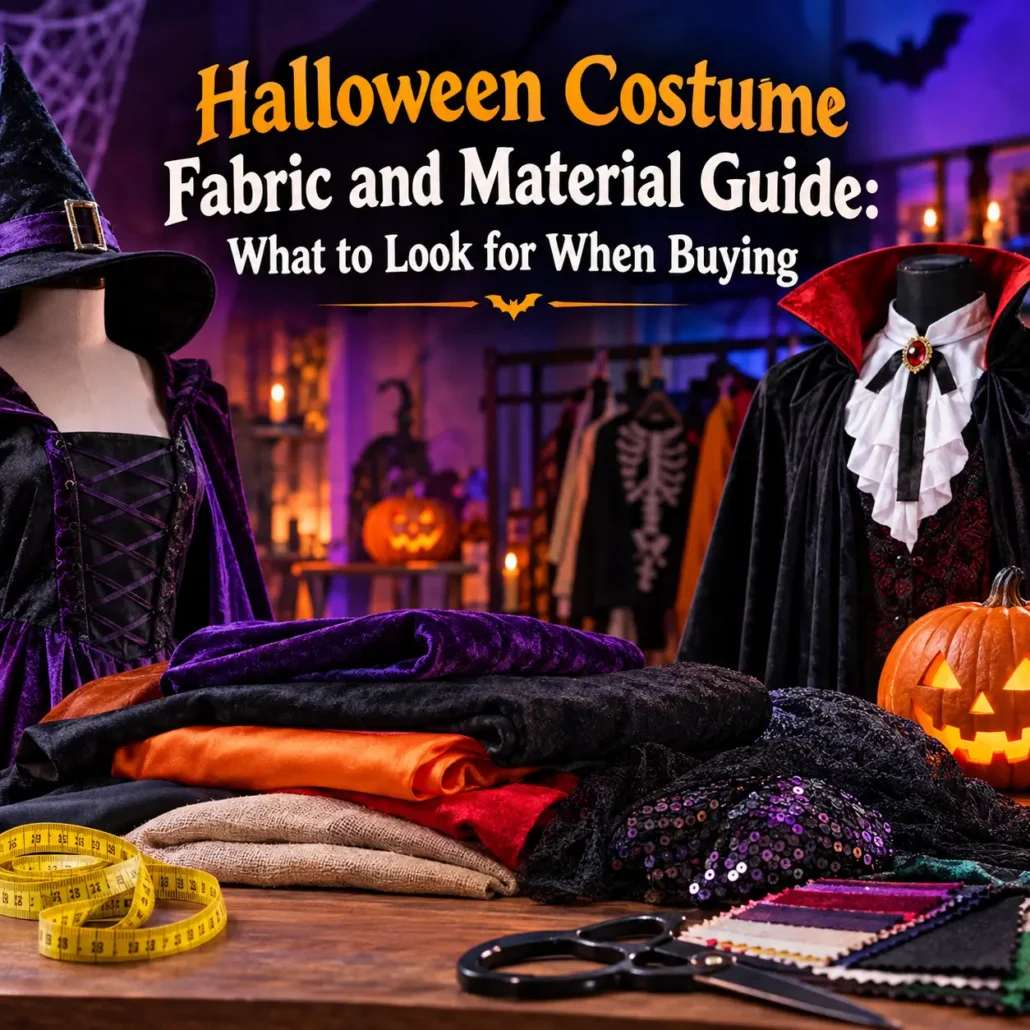
Halloween Costume Fabric and Material Guide: What to Look for When Buying
A costume can look perfect on the hanger and become miserable after two hours of wearing it. The difference often comes down to fabric. The right Halloween costume fabric guide is not really about finding one “best” material. It is about matching fabric weight, stretch, breathability, durability and construction to how you plan to wear the costume.
If you are spending an entire evening walking, dancing, taking photos, or entertaining guests, fabric quality matters just as much as the design.
What Should You Look for in Costume Fabric?
Start with five things: comfort, weight, stretch, durability, and care requirements. A dramatic costume made from stiff or irritating fabric may photograph well but become uncomfortable quickly.
| Fabric factor | What to check | Best for |
|---|---|---|
| Weight | Lightweight or heavy construction | Weather and layering |
| Breathability | How easily air moves through fabric | Warm-weather wear |
| Stretch | Amount and recovery | Fitted or active costumes |
| Durability | Seams, weave and resistance to pulling | Repeated wear |
| Texture | Smoothness against skin | Long events |
| Care | Washing and storage requirements | Reusable costumes |
This is the foundation of a practical costume fabric quality guide. The material name alone does not tell you everything.
Which Costume Fabrics Hold Up Best?
Polyester is common in costumes because it can provide durability, color retention, and useful structure without requiring delicate care. Cotton can be comfortable and breathable, while polyester blends can provide a useful balance between appearance, movement and resilience.
| Material | Strengths | Limitations | Good choice for |
|---|---|---|---|
| Polyester | Durable, versatile, holds shape | Can feel warm | General costumes |
| Cotton | Breathable, comfortable | Wrinkles more easily | Casual or warm-weather costumes |
| Polyester-spandex | Stretch and recovery | Can feel warm | Fitted costumes |
| Velvet | Rich texture and appearance | Heavy and warm | Gothic or period looks |
| Linen blends | Lightweight and breathable | Prone to wrinkles | Warm-weather looks |
There is no universal winner. The best durable costume material depends on what the costume needs to do.
What’s the Difference Between Polyester and Cotton Costumes?
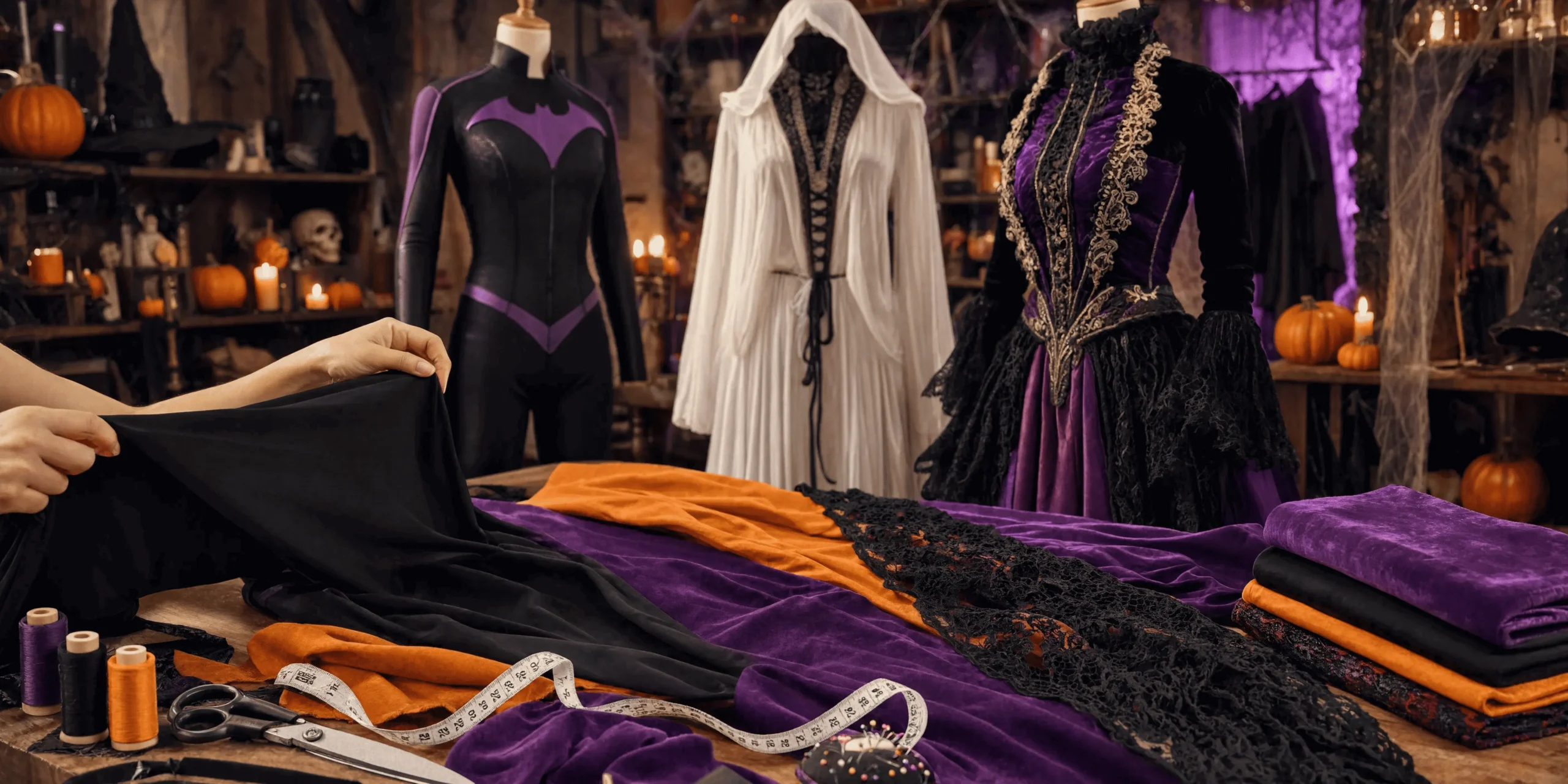
Polyester generally offers better resistance to wrinkles and can hold prints, colors, and structured shapes well. Cotton is often more breathable and comfortable against the skin, especially when you expect warm conditions or long periods of wear.
Your choice should depend on the costume design rather than the fiber label alone.
For example, a structured character costume may benefit from polyester or a blend, while a loose historical or casual costume may be more comfortable in cotton or a lightweight blend.
What Is the Best Costume Fabric for Warm Weather?
For warm-weather costumes, prioritize lightweight construction and breathable fabric rather than choosing cotton by default. Loose designs, breathable blends and fabrics that allow some airflow can be more comfortable than tightly fitted garments.
| Situation | Better approach |
|---|---|
| Outdoor Halloween party | Lightweight fabric |
| Warm indoor venue | Breathable construction |
| Fitted costume | Lightweight stretch blend |
| Multiple layers | Thin base layers |
| Long event | Avoid unnecessary heavy fabric |
The fabric, lining and overall construction all affect how warm a costume feels.
Are Stretch Fabrics Better for Costume Comfort?
Stretch fabrics can improve comfort when the costume needs to move with you, but more stretch does not automatically mean better quality. A fabric that stretches easily but does not recover its shape can become loose around knees, elbows or fitted areas.
Look for stretch plus recovery. If you can gently pull the material and it returns to its original shape, it is generally better suited to costumes involving movement.
What Fabric Holds Up Best for Dancing, Running or Movement?
Costumes involving movement need a combination of flexibility, recovery and strong construction. A polyester-spandex blend can work well for fitted designs, while more structured costumes may need stable fabric reinforced at stress points.
| Activity | Fabric priority |
|---|---|
| Dancing | Stretch and recovery |
| Running | Lightweight, flexible construction |
| Sitting and standing | Wrinkle resistance |
| Frequent movement | Strong seams |
| Costume contests | Structure plus comfort |
The fabric can be excellent and still fail if the seams, closures or high-stress areas are poorly constructed.
How Can You Tell If Costume Fabric Will Irritate Your Skin?
Pay attention to rough textures, stiff seams, scratchy decorations and synthetic materials that feel uncomfortable against your skin. Linings can make a major difference, particularly around the neck, waist and underarms.
If you are sensitive to certain fibers or finishes, check the material information before buying and consider what parts of the costume will sit directly against your skin.
How Do You Check Fabric Quality Before Buying Online?
Product photos can show color and design, but they rarely tell you how fabric feels or behaves. Check the listed material, construction details, lining, stretch information and care instructions before ordering.
Look for close-up product photos when available. If the listing provides measurements, compare them with a garment you already own rather than relying only on your usual clothing size.
What Makes One Costume Fabric Look More Expensive Than Another?
Fabric quality is not determined by price alone. Weight, surface texture, drape, stitching, and how well the material holds its shape all affect the finished appearance.
A costume with clean seams, consistent color, and fabric that hangs correctly can look far more polished than one made from a visually similar material with poor construction.
What Fabrics Wrinkle Least During Storage?
Polyester and many polyester blends generally resist wrinkles better than cotton and linen. That makes them practical for costumes you plan to pack away and reuse.
Still, folding technique matters. Store costumes loosely where possible, avoid compressing delicate details and follow the care instructions rather than automatically ironing the fabric.
How Do You Tell If Costume Fabric Will Fade After One Wear?
You cannot reliably predict colorfastness from appearance alone. Look for manufacturer care information and avoid assuming that a darker or brighter color is automatically more likely to fade.
Washing according to the garment’s instructions and keeping costumes away from prolonged direct sunlight during storage can also help preserve color.
What Fabric Is Easiest to Clean After a Night Out?
Costumes made from washable synthetic blends can be relatively practical for repeated use, but the entire garment matters. Decorative trim, glued elements, sequins, foam and special finishes may require different care from the main fabric.
Always check the garment’s care instructions before washing, especially when the costume contains multiple materials.
How Should You Match Fabric to Costume Design?
Think about what the character or look requires before choosing the material. A flowing cape needs drape, a superhero suit needs stretch and recovery, while a Victorian-inspired costume may benefit from structure and texture.
| Costume requirement | Look for |
|---|---|
| Flowing cape | Drapey, lightweight fabric |
| Fitted superhero look | Stretch and recovery |
| Gothic dress | Texture and structure |
| Historical costume | Weight and natural drape |
| Active costume | Flexible, durable construction |
| Warm-weather costume | Lightweight, breathable fabric |
This is where fabric selection becomes part of the costume design rather than an afterthought.
What Should You Check Before Buying a Costume?
Before choosing a costume, check:
- Main fabric and lining
- Stretch percentage if provided
- Size measurements
- Seam and closure construction
- Care instructions
- Whether accessories are attached or separate
- How much of the fabric touches your skin
- Whether you will wear it indoors, outdoors or both
If you want to compare different looks in person, Kreepy Halloween’s Costume Castle gives you a more practical way to consider fit, material and overall construction before committing to a costume.
When Is It Worth Paying More for Better Costume Fabric?
Paying more can make sense when you expect to wear the costume for several hours, reuse it, move frequently or want a more polished appearance. It is less about buying the most expensive material and more about avoiding compromises that affect comfort and longevity.
A well-made costume that fits properly and survives repeated wear can offer more value than a cheaper option that only works for one evening.
Ready to Choose a Better Costume?
The best costume is not simply the one that looks impressive in a photograph. It is the one that still feels right after hours of wearing it.
Use fabric type, weight, stretch, breathability and construction as your checklist. Then choose a look that fits both the character you want to become and the night you actually have planned.
Kreepy Halloween brings together costumes for different styles, body types and occasions, making it easier to discover a look that balances appearance with practical wear.
FAQs
How Can You Test Costume Fabric Before Buying It?
Check the fabric description, texture shown in close-up photos, stretch information, lining and construction details. If possible, feel the material in person and check how it moves before buying.
Is Fabric Weight Important When Choosing a Halloween Costume?
Yes. Lightweight fabrics can be more comfortable for warm conditions and active events, while heavier fabrics can provide more structure and warmth. Choose the weight based on the costume design and where you plan to wear it.
Does Costume Lining Affect Comfort?
Yes. A lining can create a smoother layer between your skin and the outer fabric, which may make a costume more comfortable during extended wear.
What Fabric Is Good for a Costume That Needs to Keep Its Shape?
Structured polyester fabrics and suitable blends can help a costume maintain its shape. The construction, seams and internal support also influence how well the costume holds its form.
Is a Costume With More Stretch Always More Comfortable?
No. Stretch can improve freedom of movement, but the fabric should also have good recovery and appropriate construction. Excessive stretch without recovery can cause the costume to lose its shape.
How Does Fabric Affect the Fit of a Halloween Costume?
Fabric weight, stretch, drape and structure can all affect how a costume sits on the body. Stretch fabrics can accommodate movement, while structured fabrics may create a more defined silhouette.
What Should You Look for in Costume Seams?
Look for clean stitching, secure seams and reinforced areas around closures and points that experience frequent movement. Strong construction can help a costume withstand repeated wear.
Can You Layer a Costume Without Making It Too Warm?
Use thin base layers and lightweight costume fabrics when possible. Avoid unnecessary heavy layers, especially when wearing the costume indoors or during an extended event.
How Should You Store a Halloween Costume After Wearing It?
Follow the garment’s care instructions, clean it as recommended and store it in a dry place. Avoid compressing delicate decorations and fold or hang the costume according to its construction.
Does the Fabric Type Matter for Children’s Halloween Costumes?
Yes. Consider comfort, breathability, movement, fit and how much of the fabric will touch the child’s skin. The costume should also be appropriate for the environment and length of wear.





Leave a Reply
Want to join the discussion?Feel free to contribute!