
Choosing a Costume Makeup Kit: Cream, Face Paint or Airbrush Explained
A Halloween makeup kit can turn a costume from recognizable into convincing. It can also turn into a frustrating mess if you choose the wrong formula for the look.
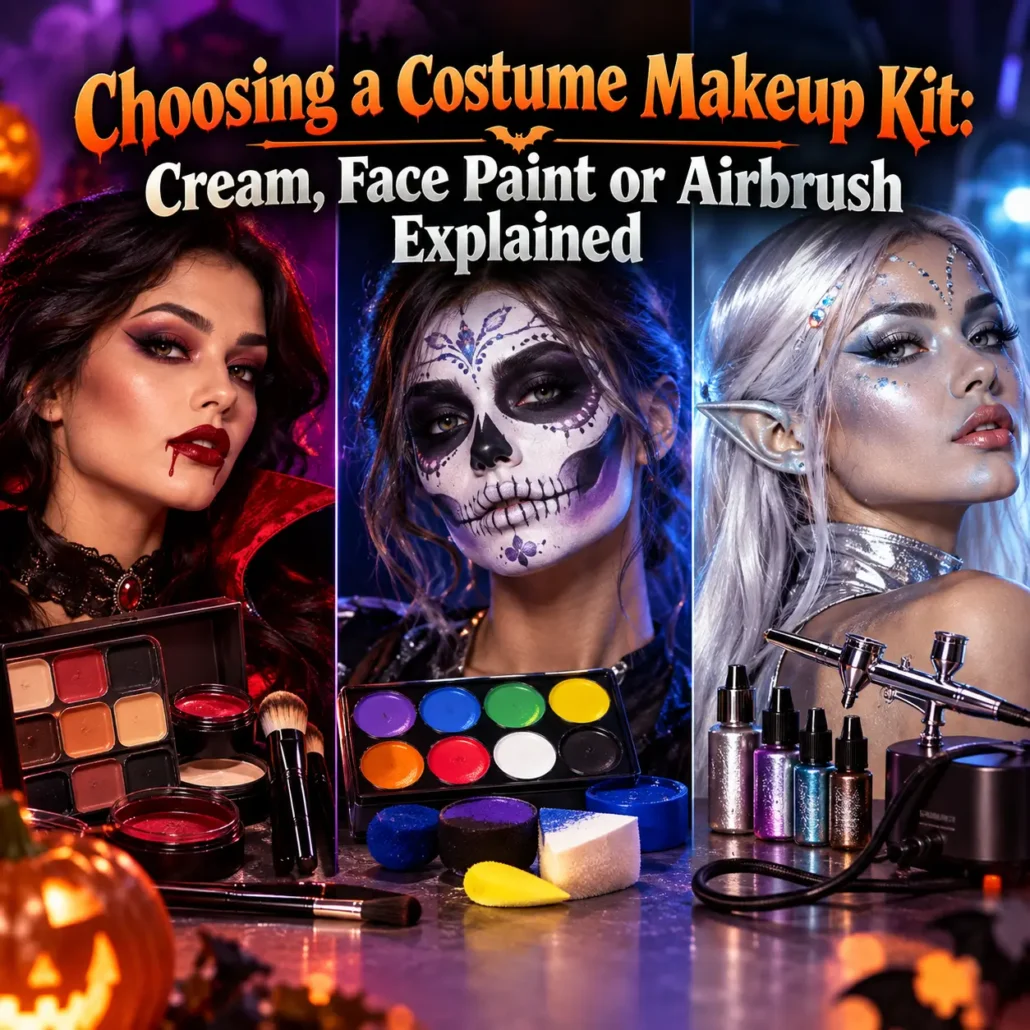
Cream makeup, face paint, and airbrush products each behave differently. One may be ideal for a vampire’s sharp contouring, while another is better for covering an entire face in blue, green, white, or another character color. Airbrush makeup can create an even finish, but it also requires equipment and a little practice.
So which one should you choose?
The answer depends on what you are creating, how much skin you need to cover, how long you need the makeup to last, and how comfortable you are with application.
Here is how the main Halloween makeup kit types compare, what each formula does best, and how to choose a kit that fits your costume rather than fighting against it.
What is the difference between cream and face paint makeup?
Cream makeup is thicker and more blendable, making it useful for contouring, shading, character details, and layered effects. Face paint is generally designed to create stronger blocks of color across the skin and is particularly useful for full-face or large-area coverage.
The difference becomes obvious when you start working on a character.
Cream formulas are useful when you need to create dimension. Think hollow-looking cheeks for a skeleton, bruised areas for a monster, dramatic contouring for a witch, or layered colors for theatrical character makeup.
Face paint is more straightforward when the objective is coverage. If your character needs an entirely white face, green skin, blue features, or another strong base color, face paint can make that process faster.
Neither is automatically the better option.
Your Halloween makeup kit types should match the job. A detailed character design may benefit from cream products and brushes, while a colorful fantasy character may need face paint for the base and cream products for shadows and details.
For many costumes, combining formulas produces the most convincing result.
How do you choose the right Halloween makeup kit?
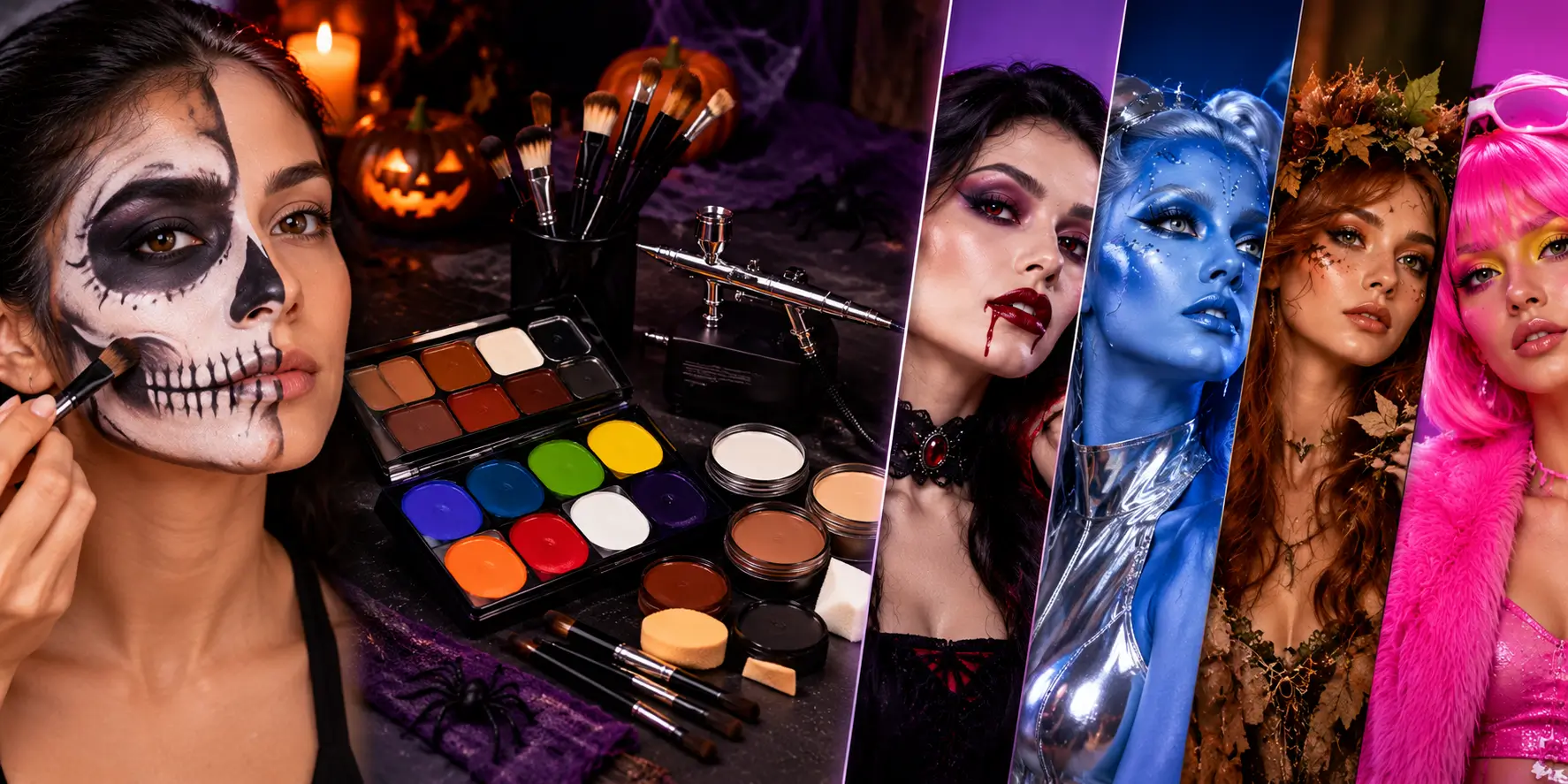
Start with the finished character rather than the kit itself. Decide whether you need full-face coverage, detailed line work, heavy contouring, special effects, or a combination of techniques.
Then consider four things:
- Coverage: How much skin needs color?
- Detail: Does the design require precise lines or small features?
- Wear time: Will you wear the makeup for an hour or an entire evening?
- Application: Are you comfortable using brushes, sponges, or an airbrush?
A simple costume may only require a few cream colors, a brush, and a sponge. A highly detailed creature or fantasy character may require multiple shades, setting products, detail brushes, and additional tools.
Think about your costume’s actual demands.
A vampire with pale skin and defined cheekbones does not need the same kit as a blue alien with a fully painted face. Buying the largest kit simply because it contains more colors can leave you with products you never use.
The best makeup kit for Halloween is the one that gives you the right tools and formulas for the character you are actually creating.
Is cream makeup better for detailed character looks?
Cream makeup is often the more practical choice when a costume depends on blending, shading, and layered detail.
Its texture allows you to build color gradually instead of placing one solid block of pigment on the skin. That makes it useful for wrinkles, shadows, bruising, exaggerated facial structure, and character-inspired contouring.
For example, a werewolf look might use a darker cream around the cheekbones and temples, followed by lighter highlights and fine lines. A skull can use cream around the eyes and cheek hollows before adding sharper details.
Cream also gives beginners more room to correct mistakes.
If a line is too strong, you can soften it. If a shadow needs to be deeper, you can build another layer.
That flexibility makes cream makeup particularly useful in a costume makeup kit guide for anyone moving beyond simple face-color application.
What makeup kit works best for beginners?
Beginners should usually start with a manageable cream or face-paint kit containing a few versatile colors, basic brushes, a sponge, and products suitable for the intended character.
You do not need a professional-looking setup to create a strong Halloween face.
A beginner-friendly kit should let you practice the techniques you actually need. Blending, blocking color, outlining, highlighting, and shading will take you further than owning dozens of colors you have never used.
A useful starter combination might include:
- A few core cream colors
- One or two face-paint shades if full coverage is needed
- A makeup sponge
- Small and medium detail brushes
- A larger brush for broad areas
- A suitable setting product
- Makeup remover for cleanup
If you are creating your first character makeup, practice once before Halloween. Test the colors on the skin, see how quickly they blend, and determine how much product you actually need.
That short rehearsal can save you considerable time on Halloween night.
Which makeup type is easiest to blend?
Cream makeup is generally the easiest of the three to manipulate when you need gradual transitions between colors.
That makes it particularly useful for contouring and character shading. You can apply a small amount, blend it outward, and build intensity as needed.
Face paint can also be blended, but its performance depends heavily on the specific formula and how it is designed to be applied. Some products are intended primarily for solid coverage rather than subtle transitions.
Airbrush makeup creates a different kind of blend. Instead of physically working the pigment across the skin with a sponge or brush, you build thin layers through sprayed application.
For someone new to airbrushing, the equipment and technique can create a steeper learning curve.
If your priority is easy blending, cream is usually the most forgiving starting point.
What kit is best for covering large areas of skin?
Face paint is often the most practical choice when a costume requires large areas of solid color.
Imagine a character with a completely green face, a blue forehead and neck, or a white base extending across the face. Applying that coverage with tiny amounts of cream can take considerably more time.
A suitable face-paint formula can make broad application more efficient.
Use a larger sponge or brush for the initial layer, then switch to smaller tools around the eyes, nose, lips, and other detailed areas.
Coverage does not mean you should apply one extremely thick layer. Multiple controlled layers can produce a cleaner finish and give you better control around facial features.
If the costume requires extensive body painting, consider the total amount of skin involved before choosing your kit. Face-only coverage and face-plus-neck coverage are very different jobs.
Is airbrush makeup better for long-lasting looks?
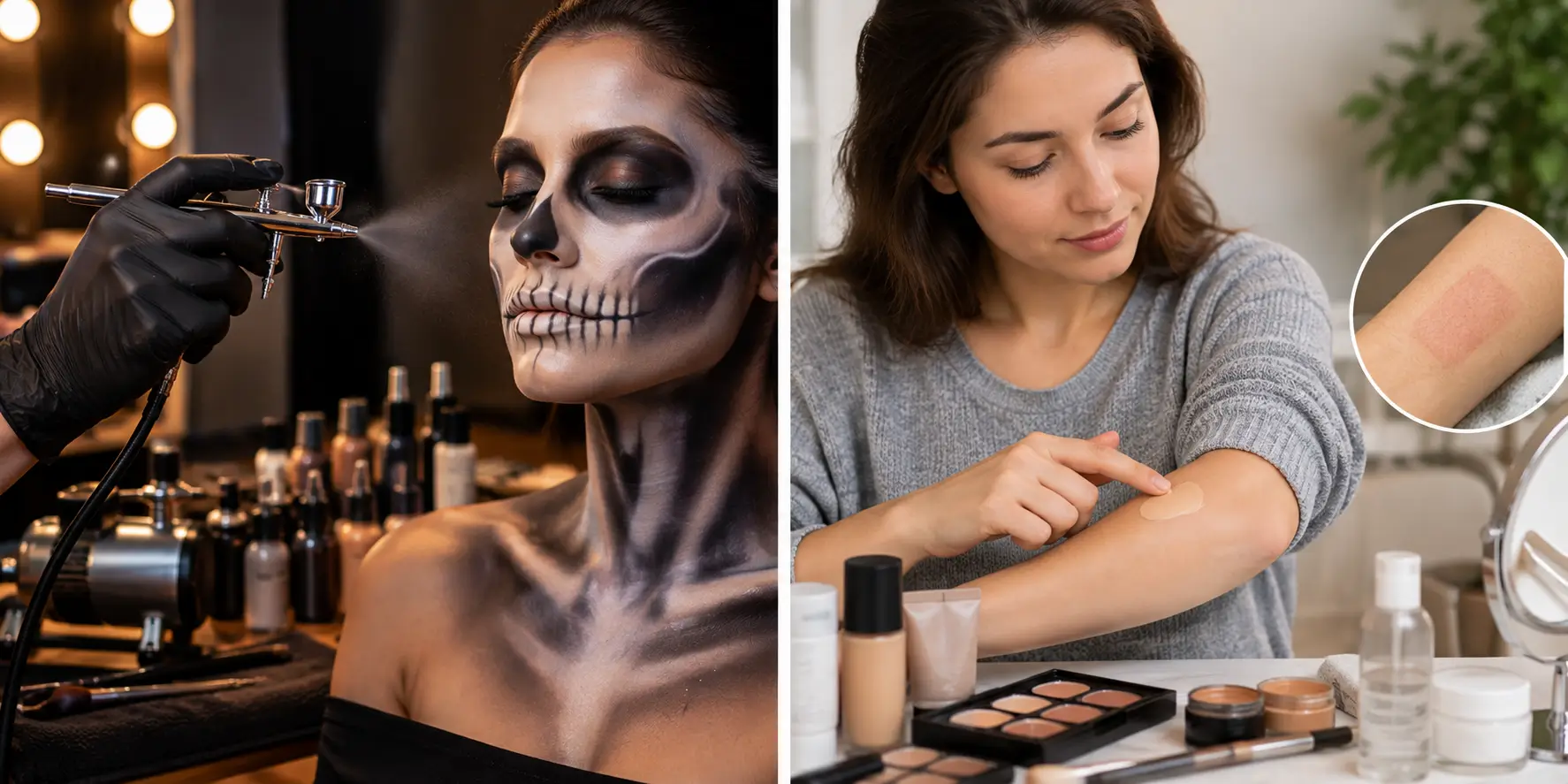
Airbrush makeup can be an excellent option for long-lasting character looks because it allows thin, even layers to build gradually across the skin. However, it is not automatically better for every costume or wearer.
Airbrushing has a clear advantage when you want an even finish across a large area without the heavier feel that can come from repeatedly layering thicker products.
It also works well when a character requires smooth color transitions or an unusually polished finish.
The tradeoff is equipment.
You need an airbrush, compressor, appropriate makeup, cleaning supplies, and enough familiarity with the system to control the application. That makes airbrush makeup less convenient for someone who wants to create a quick Halloween look with minimal preparation.
For experienced makeup users, it can be an excellent addition to a more advanced Halloween makeup kit.
For beginners, cream and face paint may provide a simpler route to the finished character.
How do you choose makeup for sensitive skin types?
Check the product’s ingredient information, follow its intended use, and patch test new makeup before Halloween. Avoid assuming that a product designed for costumes will automatically suit every skin type.
This is one area where experimentation should happen before the event.
Apply a small amount according to the manufacturer’s directions and watch for irritation. If you know that certain ingredients cause problems for your skin, check the ingredient list carefully.
Also consider how long the makeup will remain on your face. A product that feels comfortable for 30 minutes may feel very different after several hours.
Do not use craft paint or other products that are not intended for cosmetic application simply because the color looks right.
The most convincing character is not worth an avoidable skin reaction.
What tools come with a basic costume makeup kit?
A basic costume makeup kit may include makeup colors, brushes, sponges, applicators, or other accessories, but the exact contents vary by product.
Before buying, look at what is actually included rather than assuming every kit contains the same tools.
Brushes serve different purposes. A larger brush or sponge works efficiently across broad areas, while smaller brushes provide control around eyes and for fine character details.
Sponges are particularly useful for building base color and soft transitions. Detail brushes become more important when the design includes wrinkles, cracks, scars, veins, teeth, or other fine elements.
If you already own quality cosmetic brushes, you may not need a kit packed with duplicates.
Instead, spend the budget on the formulas and colors your costume requires.
For more complex looks, having the right tools can matter as much as having the right colors.
How do you choose between water-based and oil-based kits?
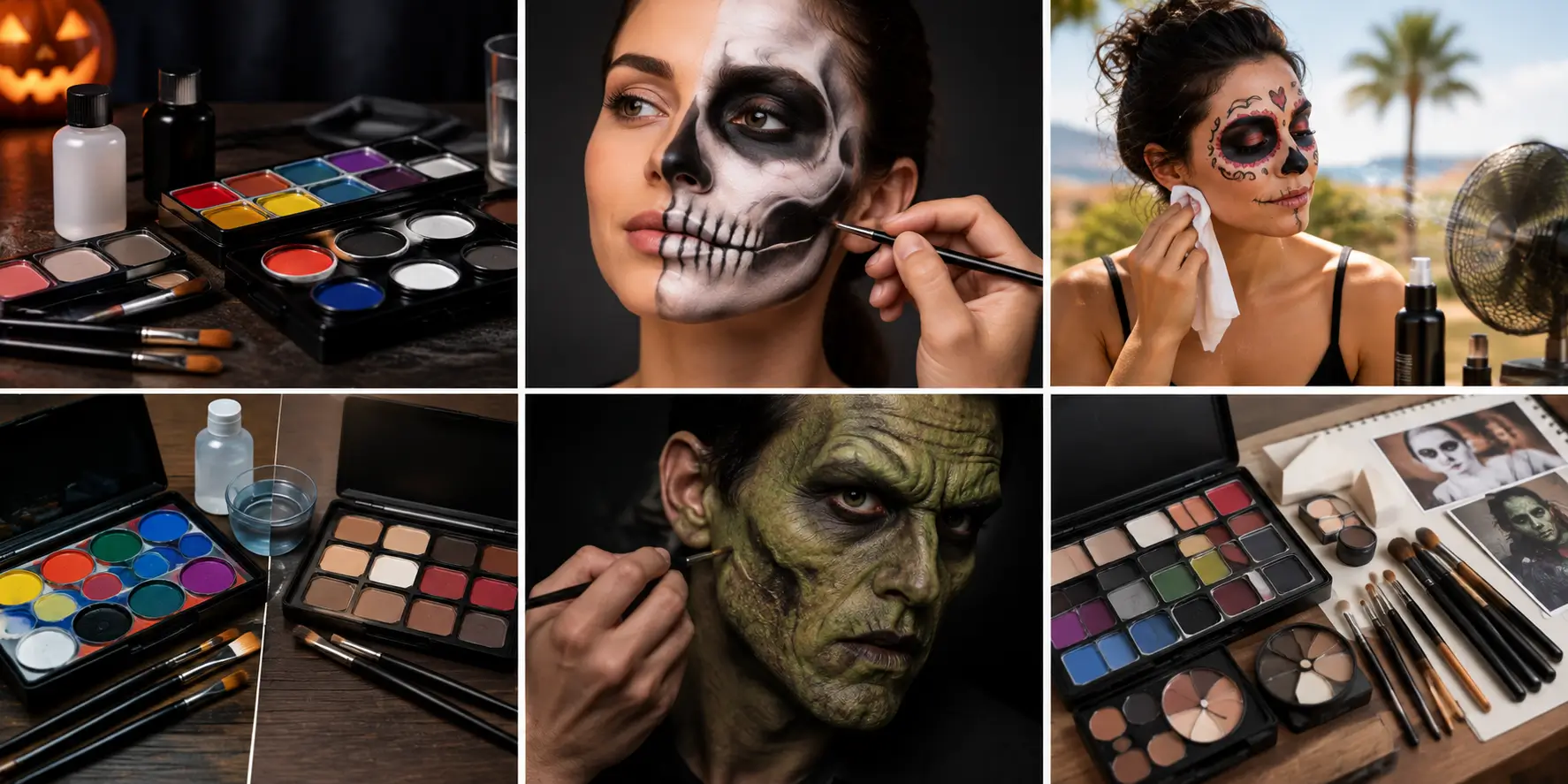
Choose based on the finish, application method, comfort, and removal requirements of the look you are creating. Water-based products are often convenient for straightforward face painting, while oil-based formulas can provide a richer, more substantial makeup effect.
The distinction matters when planning your application.
Water-based products are typically activated or applied according to the formula’s instructions and can be useful for colorful character work. Oil-based products have a different texture and can behave differently when layered or blended.
Neither category should be treated as universally superior.
Consider the costume first. A quick children’s face-paint design has different requirements from a detailed monster makeup intended for an evening event.
You should also think about removal. A formula that takes significantly more effort to remove may not be the best choice for someone who wants a simple cleanup at the end of the night.
Always follow the manufacturer’s instructions for application and removal.
Which makeup type holds up best in hot weather?
There is no single formula that performs best for every person and every costume in hot weather. Heat, sweat, skin type, application thickness, and setting technique all affect wear.
For a warm Halloween evening, avoid applying unnecessarily heavy layers. Thick makeup can become uncomfortable as you move between outdoor and indoor environments.
Prepare the skin appropriately, apply controlled layers, and use a setting product compatible with the makeup you have chosen.
Airbrush application can be useful for creating thin, even coverage, while cream products give you flexibility for detailed character work. Face paint remains practical when large areas need strong color.
The important point is to test the complete makeup system before Halloween.
Wear it for a while. Move around. See how it responds to warmth and activity. That tells you much more than choosing a formula based on its name alone.
How do you choose a kit for detailed character looks?
Choose a kit with enough color variation to create shadows and highlights, plus small brushes or other tools capable of producing precise details.
Detailed character makeup is built in layers.
Start with the base. Add shadows to establish structure. Use highlights to bring forward the areas that should appear raised. Then add the fine lines and distinctive features that make the character recognizable.
This is where a limited but thoughtfully selected palette can outperform a huge collection of unrelated colors.
A skeleton, for instance, needs more than white and black if you want depth. Subtle gray tones can soften transitions, while darker shades reinforce hollows around the eyes, nose, and cheekbones.
For monsters, fantasy characters, and theatrical designs, think about dimension rather than decoration.
The makeup should explain the character’s face.
Where can you find the right Halloween makeup kit?
Choosing between cream, face paint, and airbrush makeup becomes much easier when you can compare the products against the costume you are actually building.
That is particularly useful if you are shopping for makeup, wigs, masks, or other finishing pieces at the same time. Kreepy Halloween offers costumes alongside wigs and masks, SFX makeup and prosthetics, and accessories, allowing shoppers to build the complete character rather than choosing makeup in isolation.
For shoppers around Glendale, Burbank, and Los Angeles, seeing the broader costume selection can also help answer a question that product listings cannot: What will this makeup look like with the complete costume?
If you are still deciding on the overall character, explore the Halloween store near Glendale resources before choosing your makeup palette.
You can also explore the Halloween wigs and accessories guide if the finished look depends on more than makeup.
The brand’s focus on specialist guidance is particularly useful for shoppers building more involved character looks. Kreepy Halloween’s documented positioning includes trained costume specialists and more than 100 makeup artists within its wider network.
That gives you another reason to choose the makeup after you understand the costume, rather than buying a kit first and trying to force the character around it.
How do you build the right Halloween makeup kit?
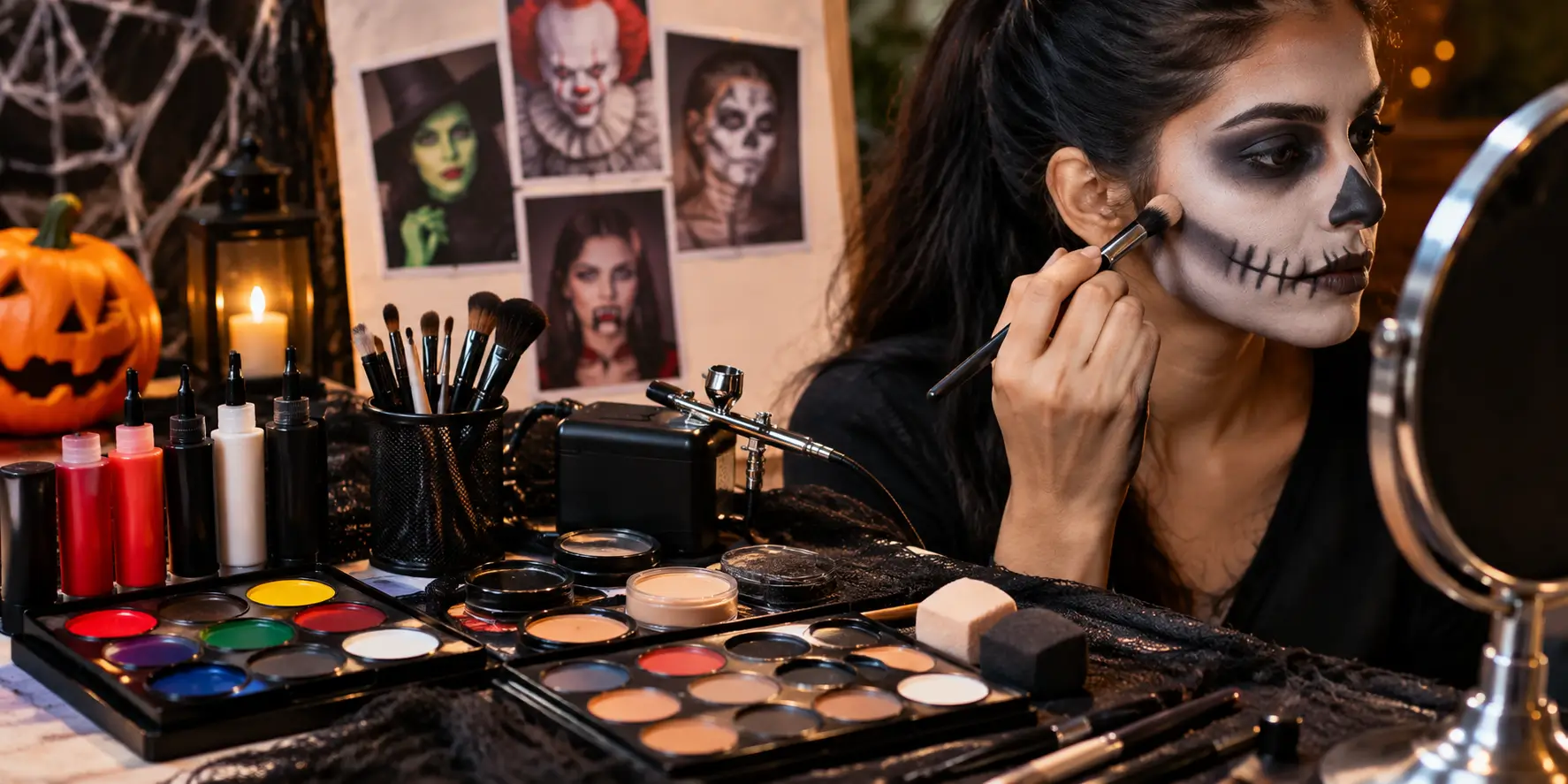
Work backward from the character.
If you need a solid color across most of the face, start with face paint. If the look depends on shadows, contours, bruising, or layered character details, cream makeup gives you more flexibility. If you want an even finish across larger areas and already know how to use the equipment, airbrush makeup may be worth considering.
For many Halloween looks, the answer is not choosing just one.
A face-paint base combined with cream shading can create more dimension. Airbrush color can establish an even foundation before hand-painted details are added. The right combination depends on the character, the amount of skin being covered, and your experience with application.
Before Halloween night, test the complete process from bare skin to finished character.
Check the color. Check the texture. Check how it photographs. Check how it wears after an hour or two.
Then make adjustments while there is still time.
A quick makeup kit checklist
Before you commit to a Halloween makeup look, ask:
- Does the formula provide the coverage my character needs?
- Do I need solid color or blended shading?
- Am I comfortable applying this type of makeup?
- Do I have the correct brushes or sponges?
- Will I need makeup for my neck or other visible skin?
- Have I tested the makeup before Halloween?
- Do I know how the product should be removed?
- Will the formula suit the environment and length of wear?
The right answers will usually make the choice between cream, face paint, and airbrush much clearer.
Ready to create the character?
Great Halloween makeup starts with the costume concept, not the makeup aisle.
Choose the formula based on the effect you need. Use face paint for broad color, cream for flexible character work and blending, and airbrush when its finish and application process make sense for the look.
Then bring the rest of the character together with the right costume, wig, accessories, and finishing details.
Discover Kreepy Halloween and explore a curated selection designed to help transform an ordinary costume into an extraordinary Halloween character.
FAQs
Can you mix cream makeup and face paint in one Halloween look?
Yes. Face paint can provide broad base color, while cream makeup can be used for shadows, highlights, contouring, and character details. Test the products together before Halloween to make sure they layer well.
How long should you test Halloween makeup before the event?
Test the complete makeup look before Halloween and wear it for a while to see how the color, texture, comfort, and finish change over time. This can help identify application or wear issues before the event.
Do you need a primer before applying costume makeup?
A suitable primer may help create a more consistent base, but whether you need one depends on the makeup formula, your skin, and the manufacturer’s application instructions. Use products intended to work with your chosen makeup.
Can Halloween makeup be used on the neck and body?
Some cosmetic products are intended for use on larger areas of skin, while others are designed primarily for the face. Check the manufacturer’s directions before applying a product to the neck or other body areas.
How do you prevent Halloween makeup from looking too thick?
Apply controlled layers rather than one heavy layer. Start with a small amount, blend or build the color gradually, and use the application method recommended for the specific formula.
What is the best way to remove Halloween costume makeup?
Follow the manufacturer’s removal instructions and use a remover suitable for the product. Avoid aggressively scrubbing the skin, particularly after wearing makeup for several hours.
Can you use regular makeup brushes for Halloween face paint?
Some cosmetic brushes can work well for Halloween makeup, depending on the formula and the type of detail required. Clean the brushes properly and make sure they are suitable for cosmetic use.
How many colors should a beginner Halloween makeup kit have?
A beginner does not necessarily need a large number of colors. A few versatile shades that match the character, along with suitable brushes and a sponge, can provide enough flexibility for many Halloween looks.
Does Halloween makeup need to be set?
Some Halloween makeup can benefit from a compatible setting product, particularly when the look needs to remain in place for an extended period. Follow the makeup manufacturer’s recommendations and test the complete combination before the event.
How can you make Halloween makeup look more realistic?
Build the look in layers using shadows, highlights, controlled color transitions, and precise character details. Focus on creating dimension rather than simply adding more decoration or color.




Leave a Reply
Want to join the discussion?Feel free to contribute!