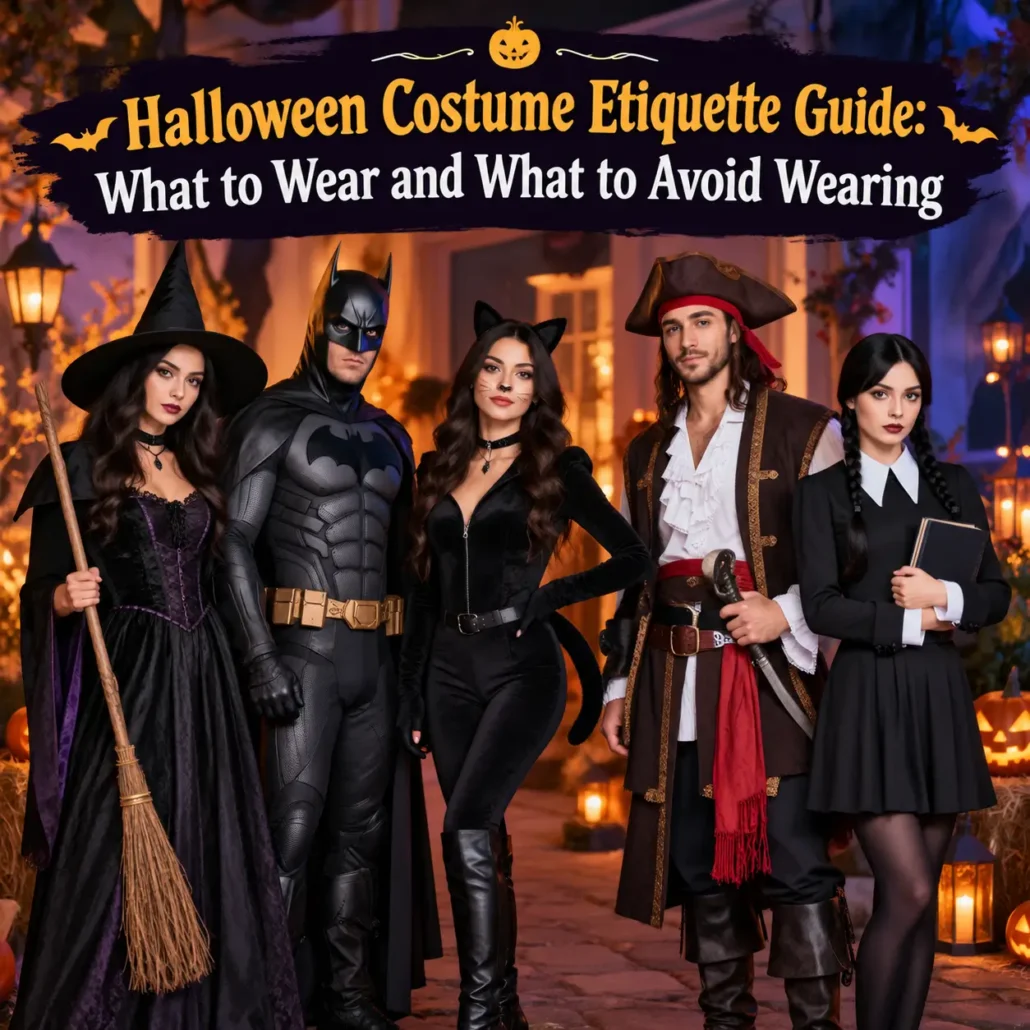
Halloween Costume Etiquette Guide: What to Wear and What to Avoid Wearing
A costume can get a laugh, start a conversation, or make a party memorable. It can also make someone uncomfortable before you have even said hello.
Good Halloween costume etiquette comes down to a simple question: will the costume fit the setting without making someone else the punchline?
That matters at a neighborhood party, a workplace event, a school celebration, and a crowded Halloween bar. The right costume considers the audience, venue, dress expectations, cultural context, and how the costume affects the people around you.
This appropriate Halloween costume guide covers the practical costume dos and don’ts so you can make a strong choice without taking the fun out of Halloween.
What makes a Halloween costume appropriate?
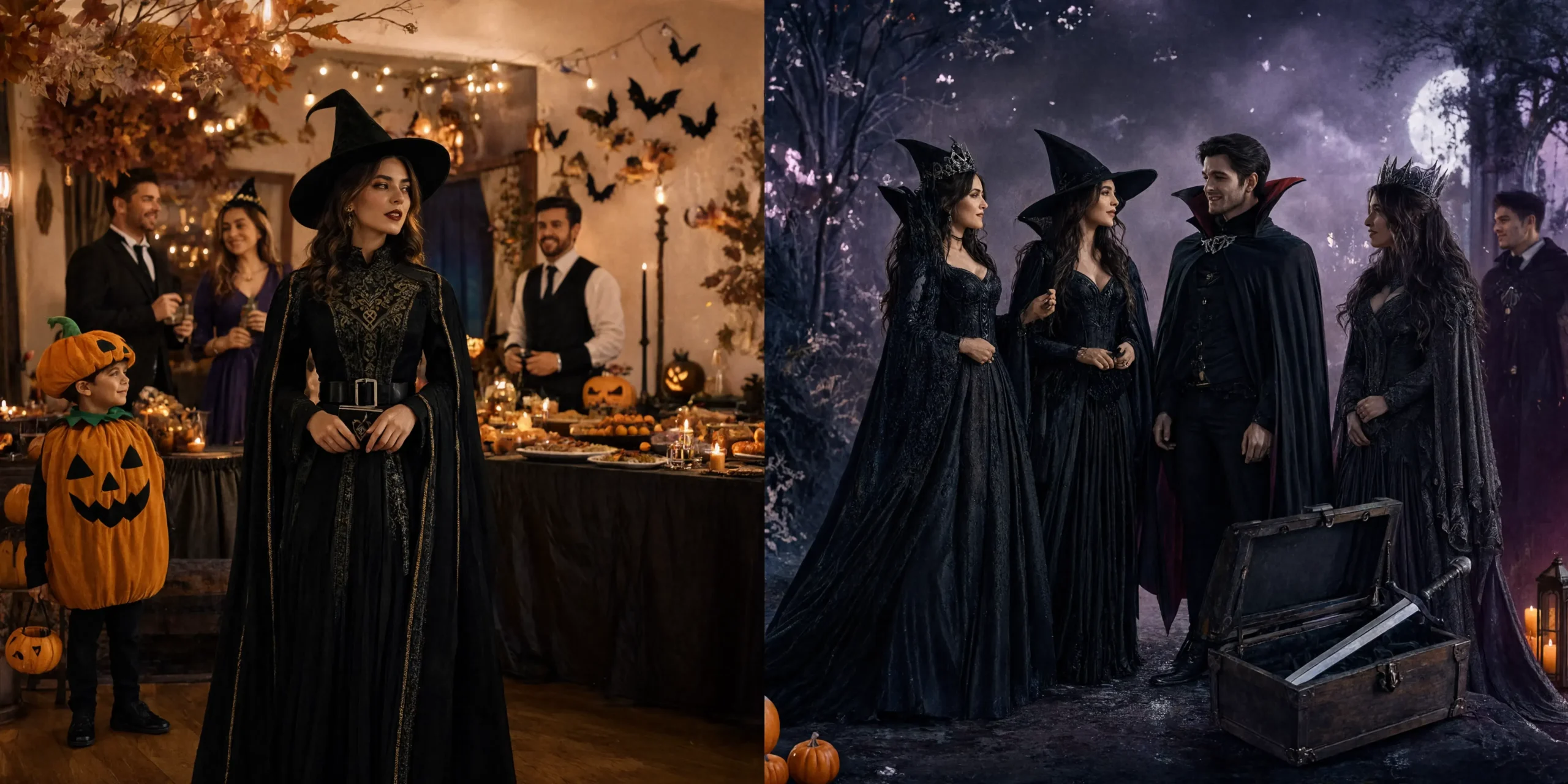
An appropriate Halloween costume suits the event, respects other people, and does not rely on offensive stereotypes, unwanted exposure, or dangerous props for its effect.
The same costume can work at one event and feel completely wrong at another. A revealing costume may be suitable for an adults-only private party but inappropriate for a workplace gathering or school event.
Before choosing your costume, consider:
- Who will be attending?
- Is the event for adults, families, or children?
- Is it a workplace, school, private home, or public venue?
- Does the host have a dress code?
- Will you need to walk, sit, work, or travel in the costume?
- Could any part of the costume reasonably make another guest uncomfortable?
- Are the accessories safe for the venue?
Think about the setting before you think about the costume.
What Halloween costumes are considered inappropriate?
Costumes become inappropriate when they cross the boundaries established by the event or use another person’s identity, culture, trauma, disability, or hardship as a joke.
Common examples include costumes that:
- Use racial, ethnic, or religious stereotypes
- Imitate protected cultural or religious attire as a joke
- Mock disabilities or medical conditions
- Make sexual references in family or professional settings
- Include excessive nudity or revealing clothing where the event does not permit it
- Glorify or imitate serious tragedies
- Use realistic weapons where they are prohibited
- Include offensive symbols or hate-related imagery
- Intentionally humiliate another person or group
You do not need to make Halloween bland to avoid these problems.
There are thousands of ways to create a distinctive costume around a character, profession, fictional world, historical period, creature, or pop-culture reference without making another person the target.
How do you choose a costume that’s respectful of other cultures?
Start by asking whether you are appreciating a culture or turning it into a costume.
Traditional clothing, religious garments, sacred symbols, hairstyles, facial features, and cultural practices can carry meaning far beyond their visual appearance. Wearing them as a joke or exaggerating them for comic effect can reduce that culture to a stereotype.
A safer approach is to take inspiration from a fictional character, fantasy setting, historical period, or visual theme without copying sacred or culturally significant elements.
If you are unsure about a costume, ask someone familiar with the culture or choose another concept. Halloween gives you plenty of room to change direction.
This is one of the most important costume dos and donts because a costume can be visually clever while still being poorly judged.
What is considered a costume faux pas?
A costume faux pas is usually a poor choice for the setting rather than a universally forbidden costume.
Showing up to a formal workplace event in a costume designed for an adults-only party is one example. Wearing an enormous costume that blocks everyone’s view at a crowded venue is another.
Other common mistakes include:
- Ignoring the event’s dress instructions
- Wearing a costume that prevents normal conversation
- Choosing accessories that repeatedly hit or obstruct other guests
- Wearing excessive makeup that transfers onto furniture or other people
- Bringing realistic-looking weapons to a venue that prohibits them
- Arriving in a costume that reveals more than the event allows
- Wearing a costume that makes another guest the subject of an unwanted joke
A costume should work in the room, not only in the mirror.
What should you avoid wearing to a work Halloween party?
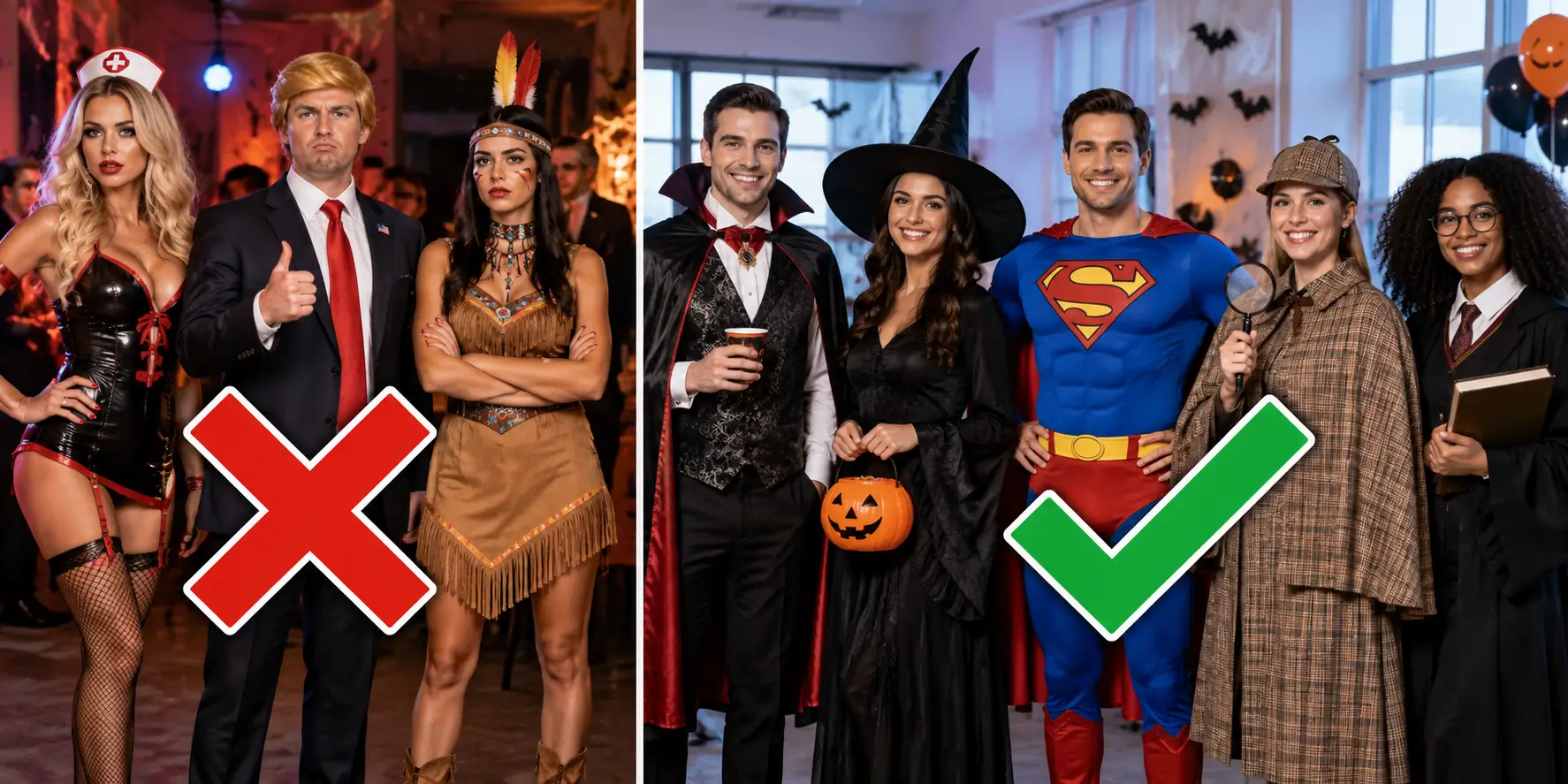
A workplace Halloween event calls for more restraint than a private party.
When choosing a work costume, avoid anything sexually explicit, politically inflammatory, culturally insensitive, excessively violent, or likely to embarrass a colleague. Avoid costumes that could interfere with your job duties if you are expected to continue working during the event.
Good workplace choices include:
- Classic monsters
- Movie and television characters
- Superheroes
- Detectives
- Historical figures
- Fictional villains
- Storybook characters
- Wordplay costumes
- Decade-inspired outfits
- Profession-inspired fictional characters
When in doubt, choose something you could comfortably explain to your manager, colleague, or client.
That simple test eliminates many questionable choices.
How do you know if a costume is too revealing for an event?
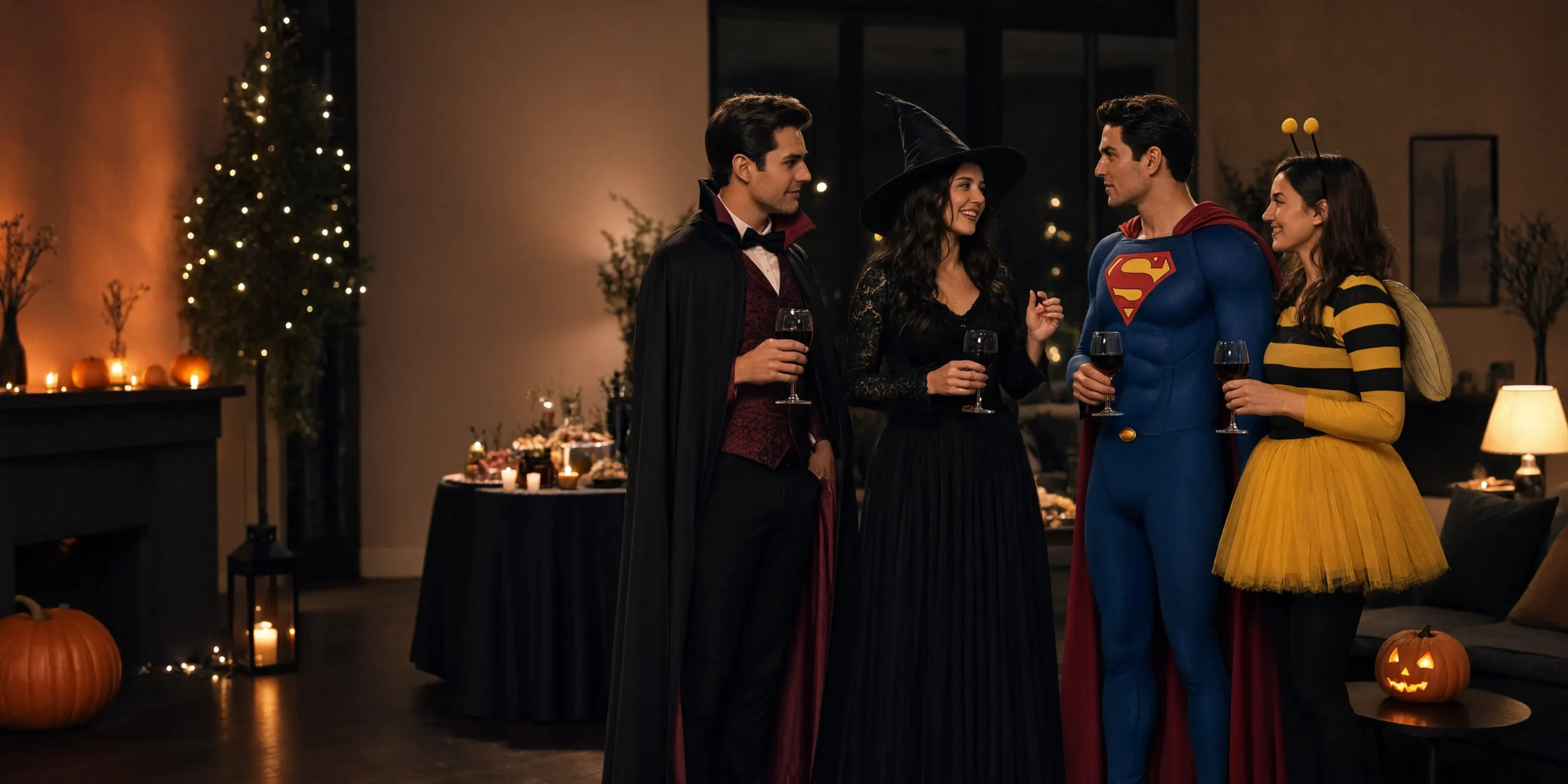
Look at the event’s audience and expectations first.
A costume can be fashionable, fitted, or deliberately dramatic without being inappropriate. The problem usually appears when the amount of exposure conflicts with the setting.
For a private adults-only party, the host may welcome a very different standard from a school fundraiser or office gathering.
If the invitation gives no guidance, choose a version that offers more coverage. You can still create the same character with makeup, accessories, hair, footwear, and distinctive costume pieces.
If you need additional finishing pieces, browsing a dedicated Halloween accessories collection can help you build character without relying on revealing clothing.
What makes a costume offensive versus playful?
Intent matters, but impact matters too.
A playful costume usually creates humor through a fictional character, clever idea, exaggerated situation, or familiar cultural reference that does not depend on degrading another person or group.
An offensive costume often gets its joke from stereotypes, humiliation, imitation of sacred identity, or a real person’s suffering.
Consider the source of the humor.
If the joke disappears when you remove the stereotype, insult, or sensitive reference, the costume probably needs another idea.
You can make a costume strange, theatrical, frightening, absurd, or deliberately over-the-top without making another group the joke.
What are polite alternatives to controversial costume ideas?
You do not have to abandon the entire concept. Change the reference point.
For example, instead of imitating a specific cultural group, create a fictional character inspired by a color palette or fantasy aesthetic.
Instead of using a serious real-world tragedy as the costume’s joke, choose a fictional disaster-movie character.
Instead of mocking a profession, create an exaggerated fictional version of it.
Instead of using someone’s physical characteristics as the costume, use clothing, props, makeup, or character traits associated with the fictional role.
This approach keeps the creative part of the idea while removing the part most likely to cause discomfort.
What costume guidelines do most schools follow?
School Halloween events generally require costumes that are suitable for children and the school environment.
Specific rules vary by school and district, so parents should check the school’s instructions before choosing a costume. Common restrictions can include no realistic weapons, no excessively frightening masks, no inappropriate language or imagery, and no costumes that interfere with classroom activities or visibility.
Schools may also have rules about face coverings, accessories, makeup, and costume length.
A practical rule is to choose a costume that allows the child to see clearly, move comfortably, sit normally, and participate in the school day.
For families, that often makes simple character costumes more practical than elaborate outfits with large props or restrictive masks.
How should hosts communicate costume expectations?
Hosts should state important costume rules before the event rather than correcting guests after they arrive.
A short note in the invitation can cover the essentials.
For example, hosts can specify whether the party is:
- Adults-only or family-friendly
- Casual or formal
- Costume-optional or costume-required
- Suitable for revealing costumes or more conservative dress
- Appropriate for realistic props
- Suitable for masks and full-face makeup
The more unusual the event, the more useful clear guidance becomes.
A host who wants a particular atmosphere should describe it plainly. Guests should not have to guess what “Halloween party” means in that particular setting.
How do you handle a costume complaint at a party?

If someone tells you that your costume makes them uncomfortable, listen before defending it.
You may have intended the costume as harmless, but explaining your intention does not resolve the other person’s discomfort.
If the concern is reasonable and you can change the costume, remove the offending element or choose another outfit. If you are hosting the event, speak privately with the guest and the person wearing the costume rather than turning the situation into a public confrontation.
The goal is to keep the party comfortable without creating a second problem around the original one.
Halloween costume etiquette for different events
The easiest way to make a good costume choice is to match the costume to the setting.
Workplace Halloween party
Choose polished, recognizable costumes that allow normal conversation and movement.
Avoid costumes that are sexually explicit, politically inflammatory, culturally insensitive, or excessively graphic.
School Halloween event
Prioritize visibility, comfort, safety, and age-appropriate themes.
Avoid realistic weapons, obstructive masks, excessive gore, and costumes that interfere with school activities.
Family Halloween party
Classic monsters, fictional characters, superheroes, animals, and imaginative fantasy costumes usually work well.
Consider whether younger children will be present before choosing an especially frightening costume.
Adults-only private party
You generally have more freedom with mature themes, revealing clothing, and darker humor.
Even here, the host’s expectations still matter. Private does not automatically mean anything goes.
Public Halloween event
Think about movement and other people’s personal space.
Oversized props, long trailing costumes, rigid accessories, or anything that obstructs visibility can become a problem in a crowded venue.
The costume etiquette checklist
Before leaving home, run through this quick checklist.
Audience
Who will see the costume?
Setting
Does it fit the venue and event?
Respect
Does it rely on a stereotype, sacred symbol, disability, tragedy, or another sensitive subject for its humor?
Coverage
Does the amount of skin fit the event?
Safety
Can you see, walk, sit, and move normally?
Props
Are your accessories permitted and safe?
Practicality
Can you eat, drink, use the restroom, and travel without constant trouble?
Host expectations
Did the invitation include any costume rules?
If you can answer all eight comfortably, you are probably on solid ground.
How to make a respectful costume memorable
Respectful does not mean forgettable.
You can build a striking Halloween costume around strong silhouettes, unusual accessories, theatrical makeup, detailed wigs, character-specific props, and carefully chosen clothing.
For more visual transformation, explore Halloween makeup inspiration and build the character through makeup rather than relying on a controversial costume concept.
You can also explore the broader Halloween costume ideas collection when you want to change direction without losing the character or theme you had in mind.
The strongest costumes usually have one thing in common. They give people something interesting to look at without making someone else uncomfortable.
A final rule for Halloween costume etiquette
Before you put on a costume, ask yourself one question.
Is the costume funny, frightening, clever, or memorable because of the idea itself?
If the answer is yes, you have a strong starting point.
If the costume only works because another person or group becomes the joke, choose another direction.
Halloween gives you plenty of room to be theatrical, strange, glamorous, frightening, nostalgic, or completely ridiculous. Choose the version that lets everyone enjoy the night.
Ready to choose your Halloween look?
Kreepy Halloween gives you room to build a costume around your own character rather than settling for an idea that could create an awkward moment. With costumes, wigs, masks, accessories, makeup, and other Halloween essentials, you can shape the look to suit the event and your personal style.
Take the occasion into account. Choose the character you want to become. Then add the details that make the costume unmistakably yours.
Keep the spirit of Halloween alive while giving everyone around you a good reason to enjoy it.
FAQ
Can the same Halloween costume be appropriate for one event but inappropriate for another?
Yes. Costume suitability depends heavily on the setting, audience, venue, and event expectations. A costume suitable for a private adults-only party may not be appropriate for a workplace, school, family gathering, or public event.
What should you consider before wearing a costume to a crowded Halloween event?
Consider whether the costume allows you to move comfortably without taking up excessive space. Large props, long trailing pieces, rigid accessories, and obstructed visibility can make it difficult to move safely around other guests.
Are realistic weapons appropriate as Halloween costume props?
Realistic-looking weapons may be restricted or prohibited at workplaces, schools, public venues, and other events. Always check the venue’s rules before bringing a weapon-style prop, even when it is clearly intended as part of a costume.
How can you make a Halloween costume easier to wear for several hours?
Choose clothing and accessories that allow you to walk, sit, eat, drink, use the restroom, and travel comfortably. Avoid costumes that are excessively restrictive, difficult to adjust, or dependent on large accessories that become inconvenient over time.
What should parents check before choosing a Halloween costume for a school event?
Parents should check the school’s specific costume rules and consider visibility, comfort, movement, accessories, costume length, makeup, and any restrictions on masks, weapons, gore, or inappropriate imagery.
Should Halloween hosts include costume rules in the invitation?
Yes. Including basic costume expectations in the invitation gives guests time to choose an appropriate outfit. Hosts can explain the event’s age group, dress style, costume requirements, and any restrictions on masks, props, revealing clothing, or mature themes.
Are large Halloween costumes suitable for crowded venues?
Large costumes may be difficult to manage in crowded venues. Before choosing one, consider whether it could block other people’s views, take up excessive space, catch on objects, or interfere with normal movement.
How can you create a character without relying on a revealing costume?
You can build a recognizable character through wigs, makeup, accessories, footwear, distinctive clothing, and character-specific props. These details can create a strong look without depending on excessive exposure.
What makes a Halloween costume practical?
A practical costume allows you to see clearly, walk, sit, eat, drink, use the restroom, and travel without constant difficulty. It should also be suitable for the temperature, venue, and activities planned for the event.
Can you still wear a scary costume at a family Halloween party?
Yes, but consider the age of the guests. Classic monsters, fantasy creatures, and mildly frightening characters can work well, while extremely graphic or frightening costumes may be uncomfortable for younger children.



Leave a Reply
Want to join the discussion?Feel free to contribute!